
Born on the Fourth of July (1989 film)
Oliver Stone's 1989 biographical drama about Vietnam veteran Ron Kovic, starring Tom Cruise; noted for its performances, awards recognition, and commentary on war and veterans' issues.
Born on the Fourth of July is a 1989 American biographical drama directed by Oliver Stone and adapted from the memoir of Vietnam veteran Ron Kovic. The film follows Kovic's transformation from a patriotic young Marine to an outspoken critic of the Vietnam War after he is paralyzed in combat. It was released in the United States on December 20, 1989 and became both a critical and commercial success.
Image gallery
6 Images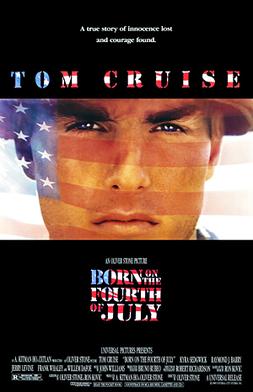




Synopsis and themes
The story traces Ron Kovic's life before, during and after his service in Vietnam. It explores themes of idealism, trauma, disability, anger and political awakening. The narrative emphasizes how personal injury and institutional responses led Kovic to public activism and shaped debates about veteran care, national identity, and the costs of war.
Production and principal cast
The film is based on Kovic's autobiography and reflects Oliver Stone's interest in recent American conflicts and veterans' stories. The lead role of Ron Kovic is played by Tom Cruise, whose performance drew wide attention. Supporting roles include Kyra Sedgwick as Donna and Holly Marie Combs as Jenny. The picture uses realistic combat sequences and hospital scenes to convey the physical and emotional aftermath of war.
- Adaptation: from Ron Kovic's memoir, which charts his life and activism.
- Cinematography and score: employed to contrast youth and battlefield, homecoming and protest.
- Historical setting: rooted in the context of the Vietnam War and late‑1960s/1970s America.
Release, reception and awards
Upon its December 1989 release the film received strong reviews from many critics and reviewers, who praised the direction and lead performance. Contemporary notices highlighted its emotional intensity and political engagement; some reviewers offered mixed views on its length and tone. The film earned significant awards recognition, including multiple Academy Award nominations and honors for direction. It was also a financial success at the box office.
Critics' reaction was widely discussed in press coverage at the time; for contemporary summaries see selected reviews and retrospectives referenced online. Critical responses emphasized acting and message, while box office reports noted its popularity with audiences and commercial returns at the time.
Impact and legacy
Born on the Fourth of July is often cited in surveys of American films about war and veterans for its unflinching portrayal of disability and political activism. It contributed to a late‑20th century reassessment of Vietnam and veterans' treatment in the United States, and it remains a reference point for actors and directors tackling similar material. The film continues to be studied for its performances, historical framing, and its role in popular discussions about war, trauma, and citizenship.
For general information on biographical films, adaptations and Vietnam War cinema, consult further resources and archival material. Additional context on the film's production and reception can be found through filmographies and interviews with the principal cast and filmmakers.
Related articles
Author
AlegsaOnline.com Born on the Fourth of July (1989 film) Leandro Alegsa
URL: https://en.alegsaonline.com/art/13128