
Sirimavo Bandaranaike — Sri Lanka's first female prime minister
Sirimavo Bandaranaike (1916–2000) was a Sri Lankan stateswoman, leader of the Sri Lanka Freedom Party, and the first woman elected head of government; she led three cabinets and shaped post‑colonial Sri Lanka.
Sirimavo Ratwatte Dias Bandaranaike (17 April 1916 – 10 October 2000) was a Sri Lankan politician and party leader who became the world's first woman elected as a national head of government. She served as prime minister on three separate occasions (first in 1960, again in 1970, and a final period beginning in 1994) and led the Sri Lanka Freedom Party (SLFP) through several decades of post‑colonial change. Her entry into national leadership followed the assassination of her husband, Solomon Bandaranaike, after which she became the party's leader and a major figure in Sri Lankan public life.
Image gallery
10 Images


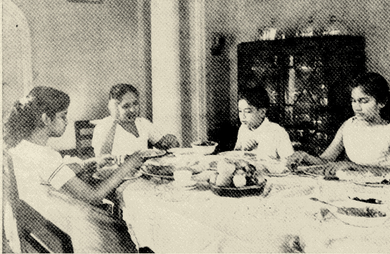


Early life and rise to leadership
Born into a prominent family, Bandaranaike married Solomon Bandaranaike, who served as prime minister in the late 1950s. Following his death she assumed party leadership and contested elections at a time when many countries still had few women in senior political roles. Her elevation to the premiership in 1960 was widely noted internationally as a breakthrough for women in politics, and it set a precedent that resonated beyond Sri Lanka.
Domestic policies and economic approach
Bandaranaike’s governments pursued a program of state‑centred development and social reform, drawing on socialist and nationalist ideas that had widespread appeal in the post‑colonial era. Her administrations expanded public ownership of key sectors, introduced regulatory measures intended to reduce foreign economic dominance, and promoted welfare and rural development programs. These policies included nationalizations and support for agrarian programs, as well as measures to promote indigenous industry and broader access to education and health services.
Constitutional change and internal challenges
Under her leadership the country moved to adopt a republican constitution in 1972, changing the formal status of the state and adopting the name Sri Lanka in place of the colonial‑era designation. Her tenure was also marked by serious internal challenges: in 1971 a youth insurgency presented a major security crisis that her government suppressed, and economic strains in the mid‑1970s produced criticism from political opponents and segments of the public.
Foreign policy and non‑alignment
On foreign affairs Bandaranaike and her cabinets emphasised non‑alignment and sought to deepen diplomatic and economic ties with a diverse range of partners rather than relying solely on the former colonial power. Her governments sought technical and financial cooperation from multiple quarters, reflecting a desire to pursue an autonomous post‑colonial path while maintaining pragmatic relations with both Western and Eastern bloc states and neighbouring countries.
Family and political succession
Bandaranaike was the widow of Solomon Bandaranaike after his murder in 1959, and her family remained influential in national politics. Three of her children later held prominent roles in public life, most notably her daughter Chandrika Bandaranaike Kumaratunga, who became president. Her son Anura and her daughter Sunethra were also active in public service and political affairs at various times.
Later years and legacy
After leading two cabinets in the 1960s and 1970s, Bandaranaike returned to national office in the 1990s, serving again as prime minister in a senior advisory and administrative role until her resignation in August 2000. She died two months later. Historians and commentators characterise her legacy as multifaceted: she broke significant gender barriers and helped to shape Sri Lanka’s institutions and policies in the early decades after independence, while critics point to economic difficulties and political tensions that accompanied periods of heavy state intervention. Her career continues to be studied in discussions about gender and leadership, post‑colonial development strategies, and the politics of South Asia.
Notable facts
- Recognised as the first woman elected to head a modern sovereign government in world history.
- Leader of the Sri Lanka Freedom Party, a major political force in the country for much of the 20th century.
- Her premierships spanned key events such as the adoption of a republican constitution and the 1971 insurrection.
- Her family continued to play a prominent role in Sri Lanka’s national politics for several decades.
For further information and contemporary accounts consult party histories, scholarly studies of post‑independence South Asian politics, and biographical profiles that explore her personal story and public record in greater depth. See also material on her premierships and family life for fuller context: more on her premierships, more on her family, and general political histories referenced in academic surveys and archives. Additional background and analyses can be found via historical overviews and political science treatments of the era that consider both achievements and controversies associated with her terms in office. Political biographies, contemporary accounts of her husband, and retrospective studies about key events may provide useful starting points for readers. Further commentary on ideology and policy is available in works addressing socialist trends in mid‑20th century development policy.
Questions and answers
Q: Who was Sirimavo Bandaranaike?
A: Sirimavo Bandaranaike was a Sri Lankan politician who served as prime minister three times and was the leader of the Sri Lanka Freedom Party.
Q: What were Sirimavo Bandaranaike's policies based on?
A: Sirimavo Bandaranaike's policies were based on socialism and similar to her husband's.
Q: What is Sirimavo Bandaranaike's claim to fame?
A: Sirimavo Bandaranaike was the first female to be elected head of government in the world.
Q: Who was Sirimavo Bandaranaike's husband?
A: Sirimavo Bandaranaike's husband was a previous prime minister, Solomon Bandaranaike, who was murdered in 1959.
Q: Did Sirimavo Bandaranaike have any children?
A: Yes, all three of her children later served in the Sri Lankan government.
Q: How many years did Sirimavo Bandaranaike spend in political office?
A: Sirimavo Bandaranaike spent 40 years in political office.
Q: When did Sirimavo Bandaranaike resign?
A: Sirimavo Bandaranaike resigned on 10 August 2000.
Author
AlegsaOnline.com Sirimavo Bandaranaike — Sri Lanka's first female prime minister Leandro Alegsa
URL: https://en.alegsaonline.com/art/130977