
Sam Giancana — Chicago mob boss (1908–1975)
Sam Giancana (1908–1975) was an Italian‑American organized crime figure who led the Chicago Outfit in the late 1950s and early 1960s. His life combined illicit enterprises, public controversy, and a violent, unresolved murder.
Overview
Sam Giancana (born Salvatore Giangana; June 15, 1908 – June 19, 1975) was an Italian‑American mobster who became one of the most visible leaders of organized crime in mid‑20th century America. He is widely identified with the Chicago Outfit, a major criminal organization active in gambling, racketeering, and other illicit enterprises.
Image gallery
3 Images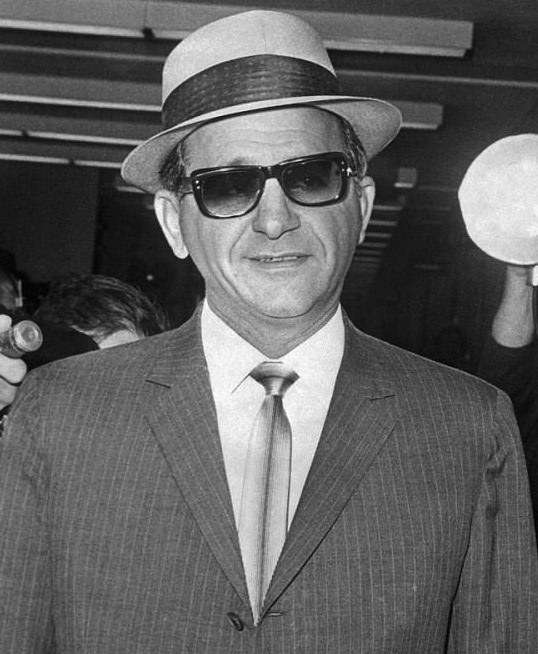


Early life and rise
Born to Sicilian immigrant parents in Chicago, Giancana rose through street gangs and bootlegging networks during Prohibition. He moved into organized gambling, loan‑sharking and enforcement roles and gradually advanced within the Outfit's ranks. By the 1950s he had gained a reputation for both discretion and ruthlessness, traits valued in the hierarchy of the syndicate.
Leadership and organization
Giancana served as an influential boss of the Chicago Outfit from the late 1950s until the mid‑1960s. Under his leadership the Outfit continued to control illegal bookmaking, casinos, labor rackets and other revenue streams. He was known to cultivate contacts beyond the underworld, including entertainers and figures in business and politics, which increased his public profile.
Public controversies and allegations
During and after his tenure Giancana became associated with a number of high‑profile allegations. Reported links include claimed—but disputed—contacts with U.S. political figures and allegations of cooperation with intelligence operatives in plots against foreign leaders. These matters generated intense media and legal scrutiny and remain subjects of debate among historians.
Notable traits and legal troubles
- Nicknames: commonly called "Sam the Cigar," "Sammy," "Mooney" and "Momo."
- Activities: implicated in gambling, extortion and organized violence typical of large crime syndicates.
- Law enforcement attention: indicted and investigated multiple times; mounting publicity and legal pressure eroded his standing by the mid‑1960s.
Death and legacy
On June 19, 1975, Giancana was murdered at his home in Oak Park, Illinois. He was shot in a violent, execution‑style killing that remains officially unsolved. His life and death have been examined in books, films and journalism as emblematic of the broader story of organized crime in postwar America, reflecting both the reach of the Outfit and the contested intersections of crime, culture and politics.
See also: studies of mid‑20th century organized crime, biographies of key Outfit figures, and investigations into alleged political ties and covert operations that involved non‑state actors.
Author
AlegsaOnline.com Sam Giancana — Chicago mob boss (1908–1975) Leandro Alegsa
URL: https://en.alegsaonline.com/art/130423