
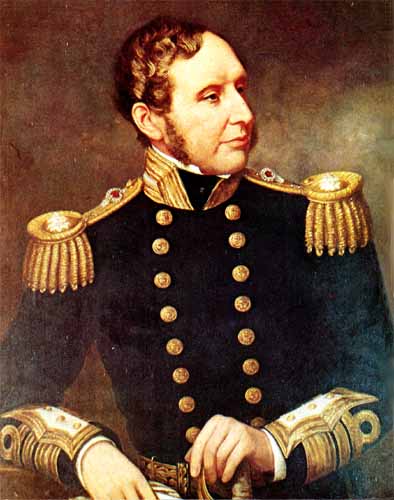
Robert FitzRoy — naval captain, hydrographer, and founder of the Met Office
British naval officer (1805–1865), captain of HMS Beagle during Darwin's voyage, Governor of New Zealand, and an early pioneer of systematic weather forecasting and meteorological services.
Robert FitzRoy (5 July 1805 – 30 April 1865) was a British naval officer whose career combined seafaring, hydrographic surveying and an early commitment to systematic meteorology. Trained in the Royal Navy, FitzRoy rose to prominence through detailed charting and command at sea. He is best remembered as the captain of HMS Beagle during the voyage that carried the naturalist Charles Darwin, and later for creating an organized service for gathering weather observations that became the forerunner of the modern Meteorological Office.
Image gallery
8 Images



Naval career and hydrography
FitzRoy established a reputation as a skilled hydrographer and surveyor, producing nautical charts and conducting coastal surveys that improved navigation safety. His professional skill earned him promotion within the navy and a reputation for exacting standards in logkeeping and instrumentation. Contemporary descriptions often identify him by his formal roles as a seaman, admiral and hydrographer.
The Beagle voyage and relationship with Darwin
As commander of the second voyage of the Beagle (1831–1836), FitzRoy supervised the ship’s scientific work and shore surveys. The voyage is widely cited because of the contributions of his young companion, Charles Darwin, whose observations on that journey later informed his ideas on evolution. FitzRoy and Darwin had contrasting temperaments and occasionally clashed, but their time aboard the Beagle was mutually influential: FitzRoy’s meticulous records and Darwin’s natural history collections together produced important scientific material.
Meteorological work and institutional legacy
After leaving extended surveying duties, FitzRoy turned to weather observation and warning systems. In 1851 he was elected a Fellow of the Royal Society, and in 1854, on recommendation by senior scientific figures, he was appointed Meteorological Statist to the Board of Trade with a small staff. In this post he organized the collection of weather reports from ships and coastal stations, made use of the telegraph to transmit observations rapidly, and developed methods to issue storm warnings and daily forecasts for mariners and ports. These practical systems and the institution he led are generally seen as the basis for the modern British national weather service.
Contributions, methods and recognition
- Introduced systematic recording and publication of weather observations from ships and land stations.
- Used telegraphic networks to assemble and distribute forecasts and storm warnings.
- Advocated clear warning signals and communicated meteorological information directly to shipping interests and the public.
FitzRoy’s methods helped popularize regular weather forecasting and the practice of issuing warnings to reduce loss of life and property at sea.
Later life and legacy
FitzRoy’s career combined public service, scientific endeavour and personal struggle. He faced opposition and ridicule at times, and his later years were marked by ill health and severe depression. He died in 1865. Historians remember him both for his role in the Beagle expedition and for founding an organized meteorological service that evolved into the national Meteorological Office. His work illustrates the 19th-century shift from isolated observations to coordinated scientific networks, and his name is often cited in histories of weather forecasting and maritime safety. For further reading on his naval surveys and gubernatorial service in New Zealand, see resources about his time as Governor of New Zealand and collections of his charts and meteorological papers (Beagle voyage, Darwin correspondence).
Author
AlegsaOnline.com Robert FitzRoy — naval captain, hydrographer, and founder of the Met Office Leandro Alegsa
URL: https://en.alegsaonline.com/art/129738