
Met Office — United Kingdom national weather and climate service
The Met Office is the United Kingdom's national meteorological service. It provides weather forecasts, climate science, warnings, training and commercial services to government, industry and the public.
The Met Office is the United Kingdom's national meteorological service, responsible for weather forecasting, climate science, observation and public warnings. It is a government executive agency that operates commercially as a trading fund, selling forecasting, modelling and consultancy services alongside its public roles. The organisation combines operational forecasting with research and international collaboration to support safety, economic planning and environmental understanding. United Kingdom weather services are delivered across multiple channels and to many sectors.
Image gallery
4 Images


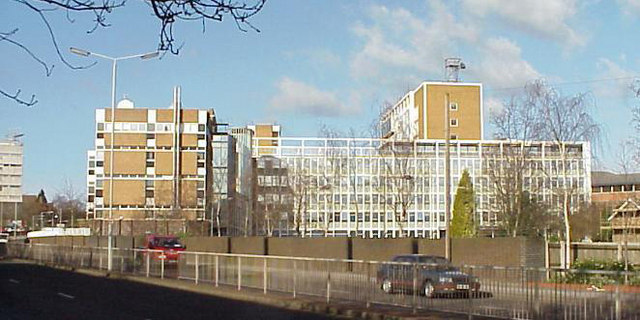
Functions and services
The Met Office issues national and local forecasts, severe-weather warnings, maritime and aviation services, and climate projections used by governments, businesses and researchers. It maintains and analyses observational networks (surface, marine, upper-air and satellite data), runs numerical weather prediction models on high-performance computers, and provides tailored products for energy, transport, agriculture and emergency planning. Revenues are generated through commercial products and contracts in addition to its public remit, with a significant portion of income coming from goods and services. Commercial services support global clients as well as domestic users.
Structure, headquarters and training
The Met Office's main headquarters and operational centre are in Exeter, in the county of Devon. Part of the site hosts the Met Office College, which provides training for its staff and for forecasters and meteorologists from other organisations and countries. The College delivers courses in operational forecasting, climate science, and specialist training for sectors such as aviation and defence. Exeter in Devon serves as a hub for operations, research and education.
History and role
The Met Office dates back to the mid-19th century and early efforts to produce systematic weather warnings and shipping forecasts. Over time it expanded into climate research, numerical modelling and international cooperation. Today it contributes to global meteorological initiatives, scientific assessment of climate change, and the development of improved forecasting techniques.
Notable features and distinctions
- Operational forecasting: 24/7 services for public safety and transport.
- Research and modelling: development and use of large-scale numerical models and supercomputing.
- Training: Met Office College provides professional development for forecasters worldwide.
- Commercial activity: provision of bespoke services and data products to industry and government.
As a national authority, the Met Office sits at the interface of science, policy and society, translating observational data and model output into practical guidance used by individuals, organisations and emergency services.
Questions and answers
Q: What is the Met Office?
A: The Met Office is the United Kingdom's national weather service.
Q: Where does more than 50% of its revenue come from?
A: More than 50% of the Met Office's revenue comes from goods and services.
Q: Why is it a trading fund of the Ministry of Defence?
A: The Met Office is a trading fund of the Ministry of Defence because of the revenue generated from goods and services.
Q: What is the Met Office College?
A: The Met Office College is a part of the Met Office headquarters at Exeter in Devon.
Q: What does the Met Office College do?
A: The Met Office College does the training for internal personnel and many forecasters from around the world.
Q: Where is the Met Office headquarters located?
A: The Met Office headquarters is located in Exeter, Devon.
Q: What is the official name for the Meteorological Office?
A: The official name for the Meteorological Office is now the Met Office.
Related articles
Author
AlegsaOnline.com Met Office — United Kingdom national weather and climate service Leandro Alegsa
URL: https://en.alegsaonline.com/art/64139
Sources
- metoffice.gov.uk : "Met Office warning colours"
- metoffice.gov.uk : "Met Office Atmospheric numerical model configurations"