
Richard Willstätter: German Chemist and Nobel Laureate in Plant Pigment Research
Richard Willstätter (1872–1942) was a German organic chemist awarded the 1915 Nobel Prize for elucidating the chemistry of plant pigments—particularly chlorophyll—and developing methods to isolate and characterize them.
Richard Martin Willstätter (13 August 1872 – 3 August 1942) was a German organic chemist best known for his pioneering studies of plant pigments. His work clarified the chemical nature of chlorophyll and related colored compounds in plants, earning him the Nobel Prize in Chemistry in 1915. Willstätter combined careful laboratory isolation with chemical degradation to reveal structural features of natural dyes.
Image gallery
3 Images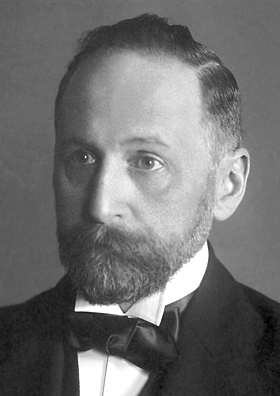


Research and principal discoveries
Willstätter focused on the composition and transformations of photosynthetic pigments. He showed that chlorophyll is a complex, magnesium-containing molecule and separated different pigment fractions that today are recognized as distinct chlorophyll types. His laboratory determined empirical formulas and identified characteristic chemical behaviors that distinguished plant pigments from simple organic dyes.
- Isolation and characterization of chlorophyll fractions (precursors to what became known as chlorophyll a and b)
- Demonstration of the presence of magnesium in chlorophyll
- Systematic chemical degradation to infer molecular components and reactive groups
Methods and scientific context
Willstätter worked at a time when organic chemistry was establishing methods to analyze complex natural products. He relied on solvent extraction, crystallization, and stepwise chemical reactions to break down pigments into identifiable fragments. His careful experimental style set standards for natural-product chemistry and influenced later structural studies that used spectroscopy and synthetic approaches.
Significance and legacy
The insight that chlorophyll contains a central metal atom and is closely related to other porphyrin-like dyes shaped later research on photosynthesis and pigments in biology, agriculture, and industry. Willstätter's findings helped later chemists and biochemists link molecular structure to biological function. For more on his life and career, see his biography.
Although his prime work dates to the early 20th century, Willstätter's influence persisted through textbooks and the practices of analytical organic chemistry. His studies of plant pigments remain a landmark in the chemical understanding of photosynthetic materials; for background on the principal pigment he studied, see chlorophyll.
In his later years Willstätter faced the political upheavals affecting many scientists in Europe. He left Germany as the situation for Jewish scientists deteriorated and died in Switzerland in 1942. His body of work endures as a model of precise, methodical research that bridged chemistry and plant biology.
Author
AlegsaOnline.com Richard Willstätter: German Chemist and Nobel Laureate in Plant Pigment Research Leandro Alegsa
URL: https://en.alegsaonline.com/art/129568