
Richard Shelby: U.S. Senator from Alabama and political career overview
Profile of Richard Shelby (born 1934), longtime U.S. Senator from Alabama: early life, congressional career, party switch, committee work, accomplishments, and personal background.
Overview
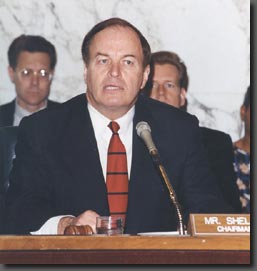
Richard C. Shelby (born May 6, 1934) is an American politician who represented the state of Alabama in the U.S. Congress for more than four decades. He served in the U.S. House of Representatives from 1979 to 1987 and in the U.S. Senate from 1987 until his retirement after the 2022 election cycle. Originally elected as a Democrat, Shelby changed his party affiliation to the Republican Party in 1994 and thereafter was a leading Republican voice from Alabama.
Image gallery
6 Images


Early life and education
Shelby was born and raised in Birmingham, Alabama. He attended the University of Alabama, where he completed his undergraduate and law degrees. His ties to the university have been long-standing; a major science facility on the campus was named Shelby Hall in recognition of his and his wife's support. For more on his hometown and formative years, see local biographies and archived profiles such as the Birmingham local records and the university's information pages at University of Alabama resources.
Congressional career
Shelby won election to the U.S. House in 1978 and served four terms before winning a U.S. Senate seat in 1986. During his Senate tenure he was re-elected multiple times and became the state's senior senator. In the mid-1990s, amid a realignment in Southern politics, he switched from the Democratic to the Republican Party, a move that reflected broader partisan shifts in the region. His Senate service included membership on major committees and a focus on federal appropriations, banking and financial matters, national security, and infrastructure investment for Alabama.
Committee work and legislative focus
Across his Senate career Shelby held leadership and senior roles on several influential committees. He was noted for his attention to federal budgeting and spending priorities, for oversight on financial and banking issues, and for work related to intelligence and defense. Observers often credited him with using his positions to secure federal projects and funding for Alabama, and he was viewed as a pragmatic conservative who emphasized fiscal restraint alongside constituent service.
Uses, significance, and notable facts
- Shelby played a key role in shaping appropriations and funding decisions that affected his state and national programs.
- His party switch in 1994 is widely cited in discussions of the political realignment of the American South.
- He announced that he would not seek reelection in 2022, ending a long congressional career that began in the late 1970s.
Personal life and legacy
Shelby is married to Dr. Annette N. Shelby; the couple has two children. His legislative record, committee service, and visible ties to the University of Alabama have made him a prominent figure in Alabama public life for decades. For biographical summaries and archival materials, consult the senator's official and historical profiles at Senate archives, party resources such as the Republican Party information, and records of his House service at Congressional directories.
Further reading: archival collections and institutional pages linked above provide detailed timelines, legislative summaries, and explanations of committee assignments for readers who want a deeper look into specific bills, votes, and initiatives associated with Shelby.
Author
AlegsaOnline.com Richard Shelby: U.S. Senator from Alabama and political career overview Leandro Alegsa
URL: https://en.alegsaonline.com/art/129553