
Pope Symmachus (Pontificate 498–514)
Pope Symmachus led the Roman Church from 498 to 514. His election provoked a lengthy schism, legal contests before the Ostrogothic king, and later recognition as a saint with feast day July 19.
Overview
Symmachus was elected bishop of Rome in 498, following the death of his predecessor. His election immediately sparked a dispute over legitimacy that produced an extended schism in the Roman Church. He is traditionally identified as Sardinian by origin and is venerated as a saint in the Catholic tradition, with a feast day observed on July 19. For basic chronological references see his papacy.
Image gallery
3 Images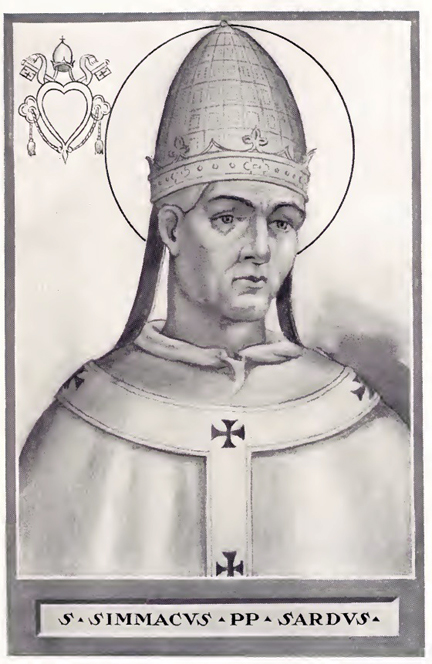


Election and the Laurentian schism
The vote that raised Symmachus to the papal throne was challenged by a rival faction that supported a different candidate, commonly known as Laurentius. This division, often called the Laurentian schism, lasted several years. The conflict mixed ecclesiastical procedure with civic and aristocratic influence, and it required secular arbitration to reach a working settlement.
Secular intervention and legal proceedings
Because civil authority in Italy at the time was exercised by the Ostrogothic king, many disputed aspects of the contest were brought before his court. Theodoric the Great and other officials became involved in hearings about contested elections and accusations of misconduct. The decisions of these proceedings helped secure Symmachus's position and set precedents for how Church disputes could engage secular power.
Activities and legacy
During his pontificate Symmachus worked to restore order in the Roman clergy and to administer diocesan affairs amid lingering factional tensions. Later writers and ecclesiastical historians highlight his role in stabilizing the Roman see after the crisis. He was succeeded by Pope Hormisdas, who continued to address questions of Church unity and relations with civil rulers.
Veneration and notable facts
- Feast day: July 19; recognized as a saint in the Catholic Church—see liturgical listings.
- Often identified as Sardinian in origin; exact birth date is not recorded.
- His papacy is remembered chiefly for the way it illustrates early medieval interactions between bishops, rival factions, and secular courts.
Symmachus's tenure is an instructive episode in the development of the papal office: it shows both the vulnerability of elections to partisan conflict and the growing expectation that secular powers might be asked to adjudicate Church affairs. The Laurentian schism and its resolution are therefore frequently discussed in studies of late antique and early medieval ecclesiastical history.
Author
AlegsaOnline.com Pope Symmachus (Pontificate 498–514) Leandro Alegsa
URL: https://en.alegsaonline.com/art/128939