
Pope Gregory VIII (Alberto di Morra)
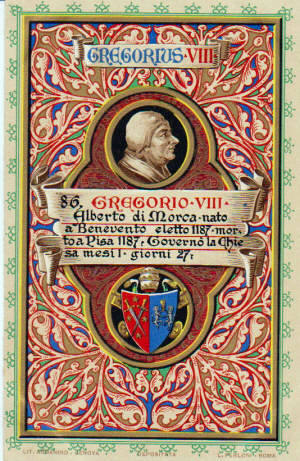
Pope Gregory VIII (Alberto di Morra) led the Roman Catholic Church briefly in 1187. A seasoned diplomat and cardinal, he is remembered for calling for a new crusade after the fall of Jerusalem.
Overview
Pope Gregory VIII, born Alberto di Morra (c. 1100–17 December 1187), served a very short pontificate in late 1187. A long-serving papal official and diplomat, he was chosen after the death of his predecessor during a crisis sparked by the Muslim reconquest of Jerusalem. Although his reign lasted only a few weeks, his actions had an outsized influence on events that followed.
Image gallery
4 Images


Early life and career
Alberto di Morra is known primarily from his work within the papal curia. For decades before his election he acted as a legal expert, envoy and cardinal, representing papal interests in Italy and beyond. His reputation was that of a pragmatic negotiator who combined canonical learning with practical diplomacy. Scholars often point to his steady administrative career when explaining his selection as pope in a tense moment for Christendom.
Papacy and principal acts
Gregory VIII assumed the papal office at a time of military and political shock: the loss of Jerusalem to Saladin in 1187. Almost immediately he issued an urgent call to Western Christians to take up arms and assist the Holy Land. His most famous document, the papal letter often referred to as Audita tremendi, urged princes and commoners to unite in a new crusade. He also sought to calm frictions between the papacy and secular rulers and to organize relief for pilgrims and refugees.
Legacy and significance
Though his pontificate lasted barely over a month and ended with his death in Pisa on 17 December 1187, Gregory VIII is chiefly remembered for initiating the papal response that led to the Third Crusade. His combination of legal skill and diplomatic experience shaped the immediate papal policy and contributed to the mobilization of European monarchs in the following years.
Further reading
Author
AlegsaOnline.com Pope Gregory VIII (Alberto di Morra) Leandro Alegsa
URL: https://en.alegsaonline.com/art/128878