
Paul Lauterbur — pioneer of magnetic resonance imaging (MRI)
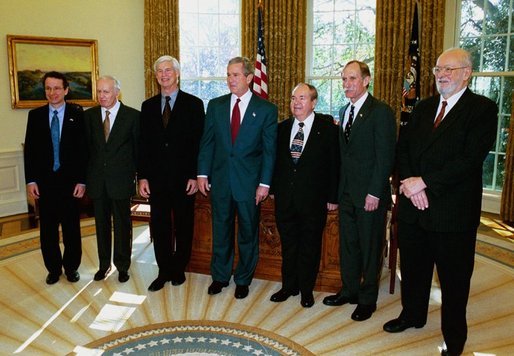
American chemist Paul Lauterbur (1929–2007) developed the spatial-encoding methods that made magnetic resonance imaging possible, sharing the 2003 Nobel Prize in Physiology or Medicine.
Overview
Paul Christian Lauterbur (May 6, 1929 – March 27, 2007) was an American chemist and researcher whose work transformed nuclear magnetic resonance (NMR) into a practical imaging tool. His insight — that applying spatially varying magnetic fields could encode location information — enabled the first images produced by NMR and established the foundation for clinical magnetic resonance imaging (MRI).
Image gallery
3 Images

Key idea and principles
Lauterbur proposed and demonstrated that adding magnetic field gradients to NMR experiments made it possible to determine where signals originated inside an object. This spatial encoding converts point-by-point NMR data into two- and three-dimensional images by relating frequency and phase shifts to position. The technique opened the way to noninvasive soft-tissue imaging without ionizing radiation.
Major contributions
- Introduced gradient-based image formation for NMR, turning spectroscopy into imaging.
- Published pioneering results in the early 1970s that showed practical image reconstruction from NMR signals.
- Stimulated further developments in fast imaging and signal processing that improved clinical utility.
Career and development
Lauterbur carried out much of his seminal work while in academic research laboratories and held faculty positions at institutions including the State University of New York at Stony Brook. His publications and demonstrations in the 1970s attracted attention from physicists, engineers and clinicians who expanded the basic method into practical scanners used in hospitals worldwide.
Impact, recognition and discussion
For the conceptual leap that enabled MRI, Lauterbur shared the 2003 Nobel Prize in Physiology or Medicine with Peter Mansfield, who contributed complementary mathematical analysis and techniques for rapid imaging (Peter Mansfield). The introduction of imaging by NMR had enormous effects on diagnostic medicine, research and treatment planning. As with many major inventions, credit and the roles of other contributors were discussed in the community; Lauterbur's central idea of spatial encoding remains widely acknowledged.
Further information
Biographical sketches, primary papers and general overviews are available for readers seeking more detail. Short introductory resources about his life and work can be found through academic and scientific outlets, while technical accounts explain how gradient encoding and later refinements produced the range of MRI techniques used clinically and in research today (biographical resource) (background) (MRI overview).
Author
AlegsaOnline.com Paul Lauterbur — pioneer of magnetic resonance imaging (MRI) Leandro Alegsa
URL: https://en.alegsaonline.com/art/128301