
Paul Krugman: economist, public intellectual, and Nobel laureate
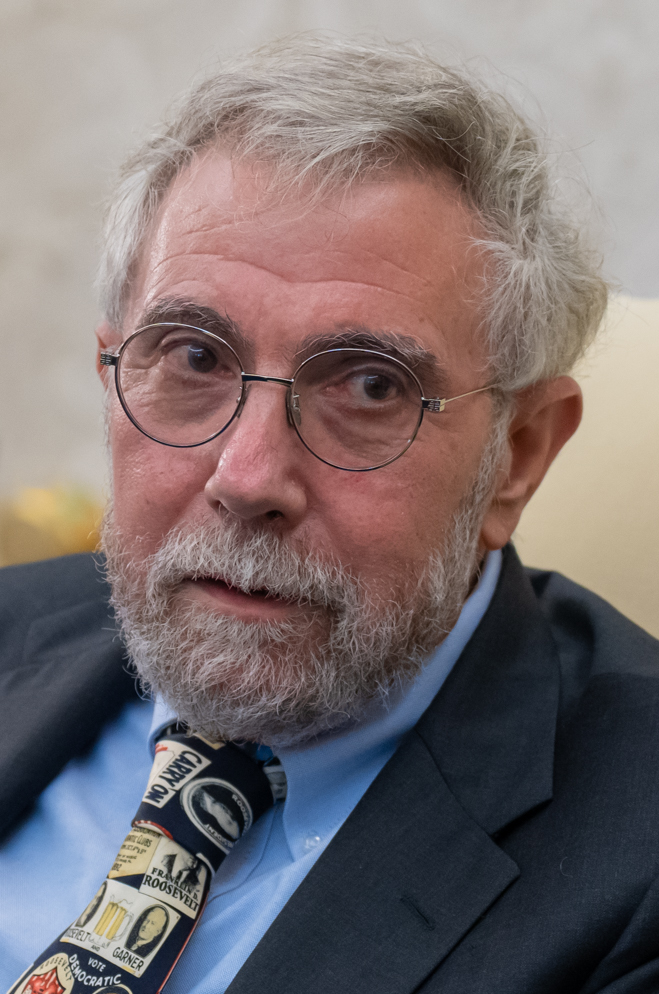
Paul Krugman (born 1953) is an American economist and 2008 Nobel Prize winner, known for contributions to trade theory and economic geography, and for his influential public commentary on macroeconomic policy.
Paul Krugman (born February 28, 1953) is an American economist who received the 2008 Nobel Memorial Prize in Economic Sciences for his analysis of trade patterns and the geographic distribution of economic activity. He is widely recognized both for technical contributions to economic theory and for a long career as a public commentator on fiscal and monetary policy.
Image gallery
10 Images



Key contributions
Krugman's academic work helped shape what is often called New Trade Theory and New Economic Geography. These approaches emphasize how economies of scale, consumer preference for variety, and transportation and market access costs can produce substantial trade among similar countries and lead to clustering of firms and workers in particular regions. The models moved trade analysis beyond comparative advantage based only on factor endowments.
Academic career and honors
He has held senior academic positions at several major institutions and has been awarded numerous honors, most notably the Nobel Prize. His research combines formal mathematical models with attention to real-world patterns of production, trade, and urban concentration.
Public role and writing
Beyond academic audiences, Krugman is a prominent public intellectual. He has written regular opinion columns and books aimed at general readers, interpreting economic events and arguing for policy responses such as countercyclical fiscal stimulus during deep recessions. His prose is notable for clarity, polemical directness, and frequent engagement with current policy debates.
Selected themes and works
- Core themes: economies of scale, intra-industry trade, economic geography, Keynesian macroeconomics, policy advocacy for stimulus over austerity.
- Notable books and collections aimed at the public include The Conscience of a Liberal and End This Depression Now!
- He also maintains a high-profile column and commentary presence, shaping public discussion of economic policy.
For further reading about his work and commentary see Paul Krugman. His combination of technical research and popular writing has made him one of the more influential and debated economists of his generation.
Author
AlegsaOnline.com Paul Krugman: economist, public intellectual, and Nobel laureate Leandro Alegsa
URL: https://en.alegsaonline.com/art/128298