
Paolo Gentiloni — Italian statesman and centre-left politician
Paolo Gentiloni (born 1954) is an Italian centre-left politician and member of the Democratic Party who served as Prime Minister (2016–2018), Minister of Foreign Affairs (2014–2016) and earlier as Communications Minister.
Overview
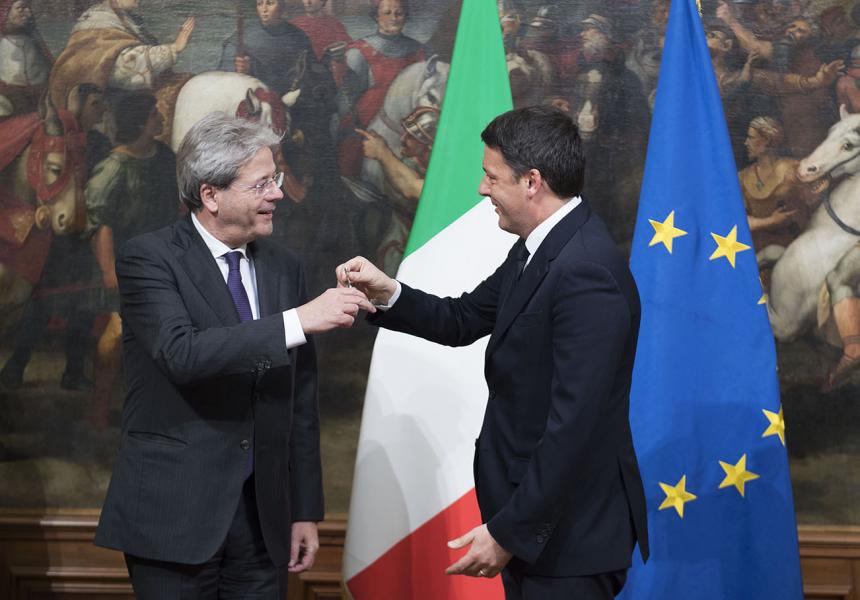
Paolo Gentiloni Silveri (born 22 November 1954 in Rome) is an Italian centre-left politician and long‑time member of the Democratic Party. He served as Prime Minister of Italy from December 2016 until 1 June 2018, after the resignation of Matteo Renzi. Before becoming prime minister he was Minister of Foreign Affairs (31 October 2014 – 12 December 2016). Earlier in his career he held the communications portfolio during the government led by Romano Prodi in the mid‑2000s.
Image gallery
10 Images


Early career and background
Gentiloni trained and worked in fields linked to communication and public affairs before rising to national prominence. He became involved in centre‑left political circles and parliamentary life, combining party activity with government responsibilities. For summary information on his career and public offices see an available political biography and official profiles.
Major government posts
- Prime Minister of Italy (December 2016 – 1 June 2018): led a centre‑left administration formed after the resignation of Matteo Renzi, guiding the country through a period of domestic economic debates and migration challenges and preparing for the 2018 general election.
- Minister of Foreign Affairs (31 October 2014 – 12 December 2016): represented Italy in European and international forums, working on relations with EU partners and Mediterranean neighbours.
- Minister of Communications (mid‑2000s): oversaw media and telecommunications policy under the government of Romano Prodi, with responsibility for regulatory aspects affecting broadcasting and digital infrastructure; see the relevant communications portfolio for details.
Policy priorities and approach
Gentiloni is widely regarded as a pragmatic and moderate figure within his party, often emphasizing consensus, institutional stability and incremental reform. As prime minister he prioritized steady management of public affairs, engagement with European partners on economic governance and migration, and measures aimed at supporting growth and financial stability while respecting coalition balances.
Foreign policy and European engagement
During his time as foreign minister and prime minister Gentiloni focused on Italy's role in the European Union, in multilateral diplomacy and in managing complex relations across the Mediterranean. His tenure addressed migration flows, humanitarian concerns and cooperation with neighbouring countries, while seeking close coordination with EU institutions and member states on security, trade and regional crises.
Legacy and subsequent relevance
Gentiloni's government served as a transitional administration between centre‑left leaderships and the political realignments that followed the 2018 elections. He is remembered for a cautious, consensus‑oriented leadership style and for maintaining continuity in Italy's European and diplomatic engagement. Further official information and archival materials can be consulted via a Prime Minister profile, party pages such as the Democratic Party site and local archives referenced at Rome.
For additional reference on specific offices and timelines consult the communications briefings at communications portfolio, contemporary accounts of the Renzi resignation and succession, and biographical summaries available from institutional pages and trusted media sources.
Author
AlegsaOnline.com Paolo Gentiloni — Italian statesman and centre-left politician Leandro Alegsa
URL: https://en.alegsaonline.com/art/128064