
Oskar Gröning: SS administrative staff at Auschwitz
Overview of Oskar Gröning (1921–2018), his role as an SS administrative worker at Auschwitz, postwar life, late-life testimony and trial, and the legal and moral questions his case raised.
Oskar Gröning (10 June 1921 – 9 March 2018) was a German member of the Nazi SS who served at the Auschwitz concentration and extermination complex during World War II. Often described in media as the camp "accountant," Gröning did not serve as a direct executioner but performed administrative duties that placed him at the scene of mass deportations and selections. In later decades he spoke publicly about what he had witnessed and was prosecuted in Germany for his wartime role.
Image gallery
3 Images
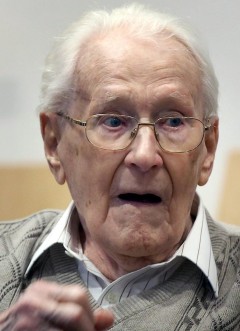

Background and wartime service
Born in Lower Saxony, Gröning joined the SS during the early 1940s and was posted to the Auschwitz camp in occupied Poland in 1942. His rank was that of an SS non-commissioned officer and he was attached to administrative units within the camp system. His responsibilities included handling luggage and valuables taken from arriving prisoners, counting and preparing money and items for shipment, and maintaining records. He witnessed deportations and the selection of prisoners sent directly to killing facilities within the complex.
Role and responsibilities
Gröning’s duties were broadly logistical rather than combative. Contemporary accounts and his own later statements describe tasks such as sorting effects, cataloguing valuables, and forwarding archives. Although he denied personally killing inmates, prosecutors and historians have argued that such administrative work helped to sustain the extermination process by removing property, facilitating transport, and documenting arrivals at a camp that was responsible for the deaths of approximately 1.1 million people.
Postwar life, testimony and prosecution
After the war Gröning returned to civilian life in Germany. Decades later he chose to speak about his experiences, giving interviews and cooperating with researchers. His willingness to testify publicly renewed attention to the moral and legal responsibility of camp staff who were not frontline killers. In the 2010s German authorities charged him with being an accessory to murder linked to his activities at Auschwitz; the ensuing trial, conviction, and sentence drew wide attention to questions of complicity and accountability.
Legal and historical significance
- The proceedings against Gröning illustrated a legal development: courts have treated service in the machinery of genocide as potential criminal complicity even without proof of direct personal killings.
- His testimony contributed to historical understanding of camp administration, the handling of victims’ property, and the everyday logistics behind mass deportations.
- The case raised public debate about memory, remorse, and how societies prosecute aging former perpetrators; health and age considerations affected enforcement of punishment.
Notable facts and distinctions
Gröning is often cited when distinguishing between perpetrators who committed direct violence and those whose bureaucratic or technical tasks nevertheless made extermination possible. Discussions of his life appear in academic studies of Auschwitz, media reports, and documentary material where he both acknowledged moral responsibility and rejected the label of direct murderer. For additional documentary background and legal summaries see sources linked here: Waffen-SS context, Auschwitz history, biographical records and trial overviews.
Questions and answers
Q: Who is Oskar Gröning and what was his profession?
A: Oskar Gröning was a former member of the Waffen-SS and was stationed at Auschwitz concentration camp.
Q: When and where was Oskar Gröning born?
A: Oskar Gröning was born on 10 June 1921, in Lower Saxony.
Q: What kind of job did Oskar Gröning's father have?
A: Oskar Gröning's father was a skilled textile worker.
Q: Did Oskar Gröning have a mother while growing up?
A: Yes, Oskar Gröning had a mother, but she died when he was four.
Q: What is the English translation of Oskar Gröning's last name?
A: Oskar Gröning's last name is sometimes transliterated as Oscar Groening in English.
Q: What was Oskar Gröning's rank in the SS?
A: Oskar Gröning was an SS-Unterscharführer.
Q: What was Oskar Gröning's role at Auschwitz concentration camp?
A: It is not specified in the provided text what Oskar Gröning's specific role was at Auschwitz concentration camp.
Author
AlegsaOnline.com Oskar Gröning: SS administrative staff at Auschwitz Leandro Alegsa
URL: https://en.alegsaonline.com/art/127964