
Olympe de Gouges: playwright, activist, and early advocate for women's rights
French writer and political activist (1748–1793) best known for the Declaration of the Rights of Woman and the Female Citizen and for advancing women's and abolitionist causes during the French Revolution.
Overview
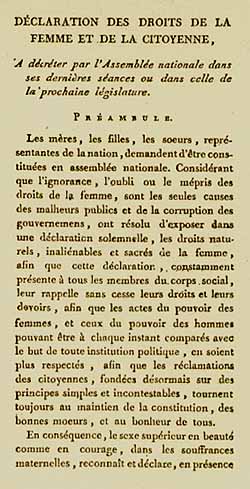
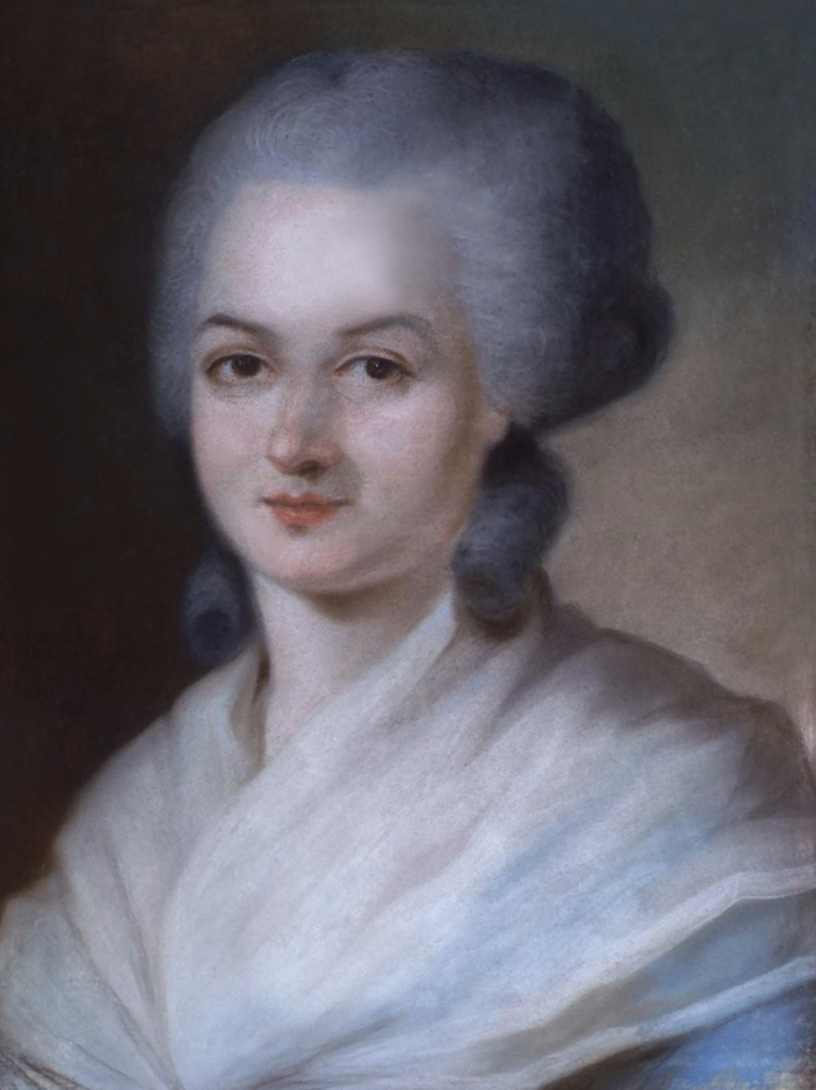
Olympe de Gouges (born Marie Gouze; 7 May 1748 – 3 November 1793) was a French playwright, polemicist and political activist who became one of the most visible advocates for women’s civic equality during the years of the French Revolution. Her name is associated above all with the Declaration of the Rights of Woman and of the Female Citizen, a direct challenge to revolutionary leaders who proclaimed universal rights but excluded half the population. She combined literary work with outspoken interventions in public debates on marriage, education, slavery and social reform.
Image gallery
10 Images



Early life and career
De Gouges was born in Montauban in southern France and received little formal schooling. As a young woman she married; the marriage ended after a few years and she eventually moved to Paris, where she adopted the pen name Olympe de Gouges and pursued a literary career. In Paris she wrote plays, novels and pamphlets, and she used salons, the press and personal contacts to make her views heard. Her work ranged from theatrical comedy to political pamphleteering, and she sought to influence public opinion through both art and argument.

Political writings and ideas
De Gouges argued that the principles proclaimed by the Revolution should be applied equally to women. In 1791 she published the Declaration of the Rights of Woman and of the Female Citizen, a text that echoed the language of the revolutionary Declaration of the Rights of Man but insisted that women be recognized as full political subjects. She proposed reforms to marriage law, access to inheritance and divorce, and public education for girls. She also spoke against slavery and in favor of legal protections for children born out of wedlock, bringing feminist concerns together with broader human rights questions. See her interventions on feminist issues and on human rights for context.
Works and themes
- Declaration of the Rights of Woman and of the Female Citizen – her best-known political text, advocating equal civic and legal rights for women.
- Plays and novels – she wrote dramas and comedies that often contained social critique and appealed to contemporary audiences.
- Pamphlets on slavery and justice – she condemned colonial slavery and urged legal reforms, linking abolitionist themes to her broader vision of universal rights.
Arrest, execution, and legacy
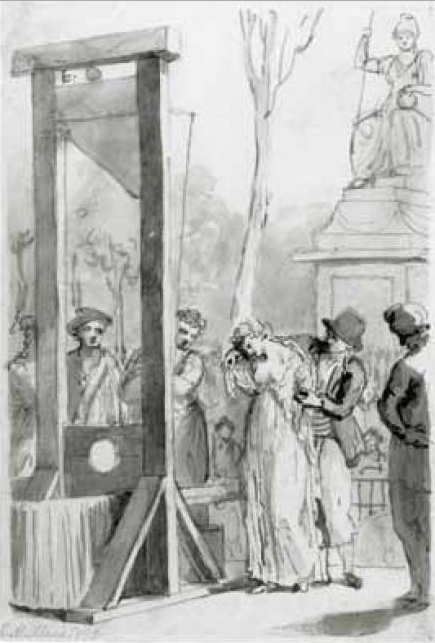
As the Revolution radicalized, de Gouges’s independent positions and public criticisms of revolutionary leaders made her vulnerable. She continued to publish and to challenge both the Girondins and the Jacobins, and in 1793 she was arrested and executed by guillotine during the Reign of Terror. After her death she became a symbol for later generations of feminists and human-rights activists: her insistence that political rights be extended to women anticipated later debates about citizenship and equality.
Notable facts and influence
De Gouges stands out for combining literary production with explicit political programmatic writing at a moment when women were often excluded from formal politics. Her Declaration remains a touchstone in histories of feminism and revolutionary thought. While some of her proposals were far ahead of their time, her clear demand that rights be universal helped shape later conversations about gender, law and democracy.
Author
AlegsaOnline.com Olympe de Gouges: playwright, activist, and early advocate for women's rights Leandro Alegsa
URL: https://en.alegsaonline.com/art/127897