
Olusegun Obasanjo: Nigerian leader, soldier, and statesman
Overview of Olusegun Obasanjo, Nigerian military ruler (1976–1979) and democratically elected president (1999–2007), his career, roles in African institutions, and legacy.
Olusegun Mathew Okikiola Aremu Obasanjo (born 5 May 1937) is a Nigerian political and military figure who has played a prominent role in his country's modern history. He served as the head of state during a military regime from 1976 to 1979 and later became a democratically elected president from 1999 to 2007. Over several decades he has been active in regional and international diplomacy, economic reform efforts and political debates across Africa.
Image gallery
10 Images


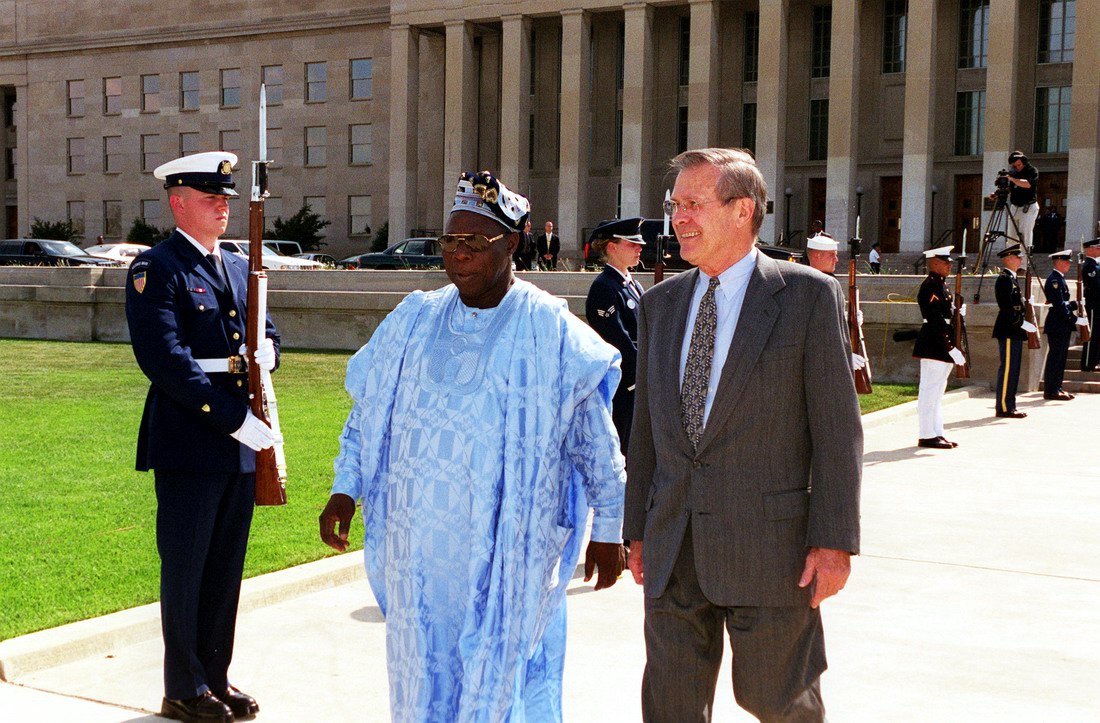

Early life and military career
Obasanjo began his public career in the Nigerian Army and rose through the ranks during the 1950s and 1960s. His military service placed him at the center of several key events in Nigeria’s post‑independence period. After the assassination of the then‑head of state in 1976, Obasanjo assumed national leadership and led a transition toward civilian government at the end of the 1970s.
First tenure: transition to civilian rule (1976–1979)
As head of the federal government in the late 1970s, Obasanjo supervised a process that culminated in the handover of power to an elected civilian administration in 1979. That period is often noted for its emphasis on restoring constitutional government and preparing institutions for democratic rule.
Return to politics and civilian presidency (1999–2007)
After years away from front‑line politics and a period of detention during the 1990s under another military regime, Obasanjo returned to electoral politics and won the presidency in 1999. Re‑elected for a second term in 2003, his civilian administrations pursued economic reforms, debt relief negotiations, and programs intended to modernize infrastructure and public institutions. His government also promoted anti‑corruption mechanisms and greater engagement with international financial and diplomatic partners.
Roles in Africa and international engagement
Beyond Nigeria, Obasanjo has been active in pan‑African affairs. He served as Chairperson of the African Union from 2004 to 2006 and has undertaken diplomatic missions on behalf of continental bodies. In August 2021 he was appointed by the African Union as a High Representative for peace efforts in the Horn of Africa. His public interventions have ranged from mediation in regional disputes to advocacy for debt relief and development cooperation.
Legacy and notable facts
- Obasanjo is among the few Africans who have led their country both as a military head of state and later as an elected civilian president.
- His name appears in multiple languages and contexts; his Yoruba heritage is often noted in biographical references: Olúṣẹ́gun Ọbásanjọ́.
- He remains a central and sometimes polarizing figure in Nigerian politics, frequently consulted on national affairs and international mediation.
For an introduction to the country he led, see general information about Nigeria. Obasanjo’s long public life combines military service, a role in restoring civilian government in the 1970s, later democratic leadership, and ongoing participation in continental diplomacy.
Author
AlegsaOnline.com Olusegun Obasanjo: Nigerian leader, soldier, and statesman Leandro Alegsa
URL: https://en.alegsaonline.com/art/127896