
Muhyiddin Yassin: Malaysian politician and eighth Prime Minister
Biography and overview of Muhyiddin Yassin, his political career, time as Malaysia's 8th Prime Minister, affiliations, roles, controversies, and significance in contemporary Malaysian politics.
Overview
Muhyiddin Yassin (born Mahiaddin bin Haji Muhammad Yassin, 15 May 1947) is a Malaysian politician who served as the country’s eighth Prime Minister. He assumed office in early March 2020 after the collapse of a previous administration and led the federal government until resigning in August 2021 following the loss of parliamentary support. His tenure coincided with the global COVID-19 pandemic and significant political realignment in Malaysia.
Image gallery
10 Images




Political career and offices
Muhyiddin has held a series of senior roles in Malaysian politics over several decades. He was Deputy Prime Minister from 2009 to 2015 and held senior positions within the United Malays National Organisation (UMNO), including Deputy President and Deputy Chairman of the Barisan Nasional coalition. After leaving UMNO in 2016, he became a founding figure in Parti Pribumi Bersatu Malaysia (commonly known as Bersatu) and later served as its acting chairman.
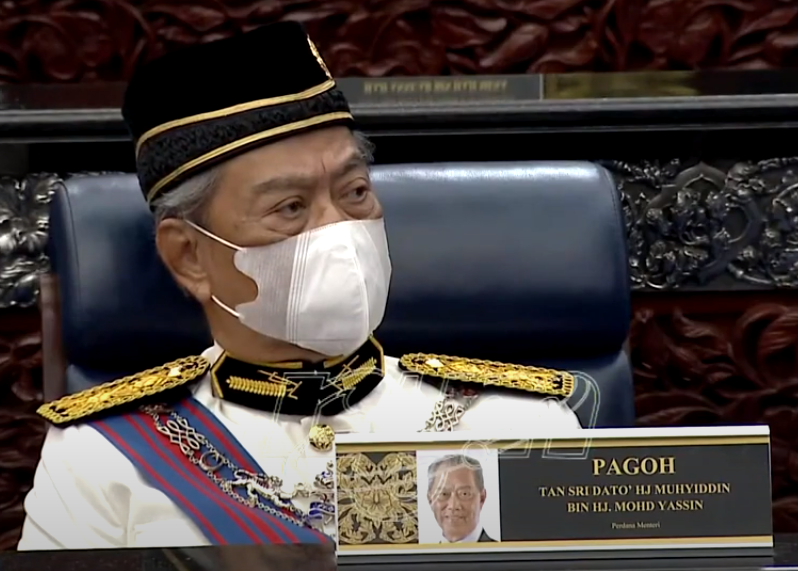
At the parliamentary and state levels, Muhyiddin has represented constituencies in his home state of Johor. He is the Member of Parliament for Pagoh and has served in the Johor State Legislative Assembly for the Gambir seat. Over his career he has also led or been part of several coalitions and alliances that have sought to shape national policy and governance.
Premiership (2020–2021)
Muhyiddin became Prime Minister after a period of political instability triggered by a change in coalition alignments and the resignation of the previous prime minister, Mahathir Mohamad. He was appointed on 29 February 2020 and sworn in on 1 March 2020 as leader of a newly formed ruling coalition. His government confronted the public-health and economic challenges posed by the COVID-19 pandemic and implemented emergency measures and stimulus initiatives intended to mitigate the crisis. These measures and the political steps taken to secure parliamentary support sparked debate and criticism within Malaysia and abroad.
Positions, policies, and controversies
As a senior political figure, Muhyiddin has emphasized issues such as economic resilience, social stability, and rural development. His administration’s approach to pandemic management, emergency rule declarations, and cabinet appointments generated both support and criticism; opponents argued that certain actions consolidated executive power, while supporters contended they were necessary to maintain governance during a crisis. In August 2021 he announced his resignation after acknowledging insufficient backing in parliament, paving the way for a further reconfiguration of Malaysia’s governing arrangements.
Legacy and significance
Muhyiddin’s time in national leadership marked a turbulent chapter in Malaysia’s modern political history, characterized by shifting party loyalties, the emergence of new coalitions, and the stress test of a global pandemic. He remains an influential figure within Bersatu and Malaysian politics more broadly, with his career illustrating the fluidity of coalition politics in the country and the challenges of governing during emergencies. For more detailed records of his tenure and public statements, see his official profile as the country’s 8th Prime Minister.
Selected offices and roles
- Deputy Prime Minister of Malaysia (2009–2015)
- Deputy President of UMNO (until 2016)
- Founding member and senior leader of Parti Pribumi Bersatu Malaysia (Bersatu)
- Member of Parliament for Pagoh and state assembly member for Gambir
Muhyiddin’s political path reflects both continuity and change in Malaysia’s post-independence era: long experience within established political structures, followed by participation in new party formations and coalitions that reshaped the national landscape in the 2010s and early 2020s.
Author
AlegsaOnline.com Muhyiddin Yassin: Malaysian politician and eighth Prime Minister Leandro Alegsa
URL: https://en.alegsaonline.com/art/127299