
Moors murders
A summary of the Moors murders carried out in and around Greater Manchester (1963–1965), covering perpetrators, victims, investigation, trial, and the case's long-term impact on British criminal justice and public memory.
Overview
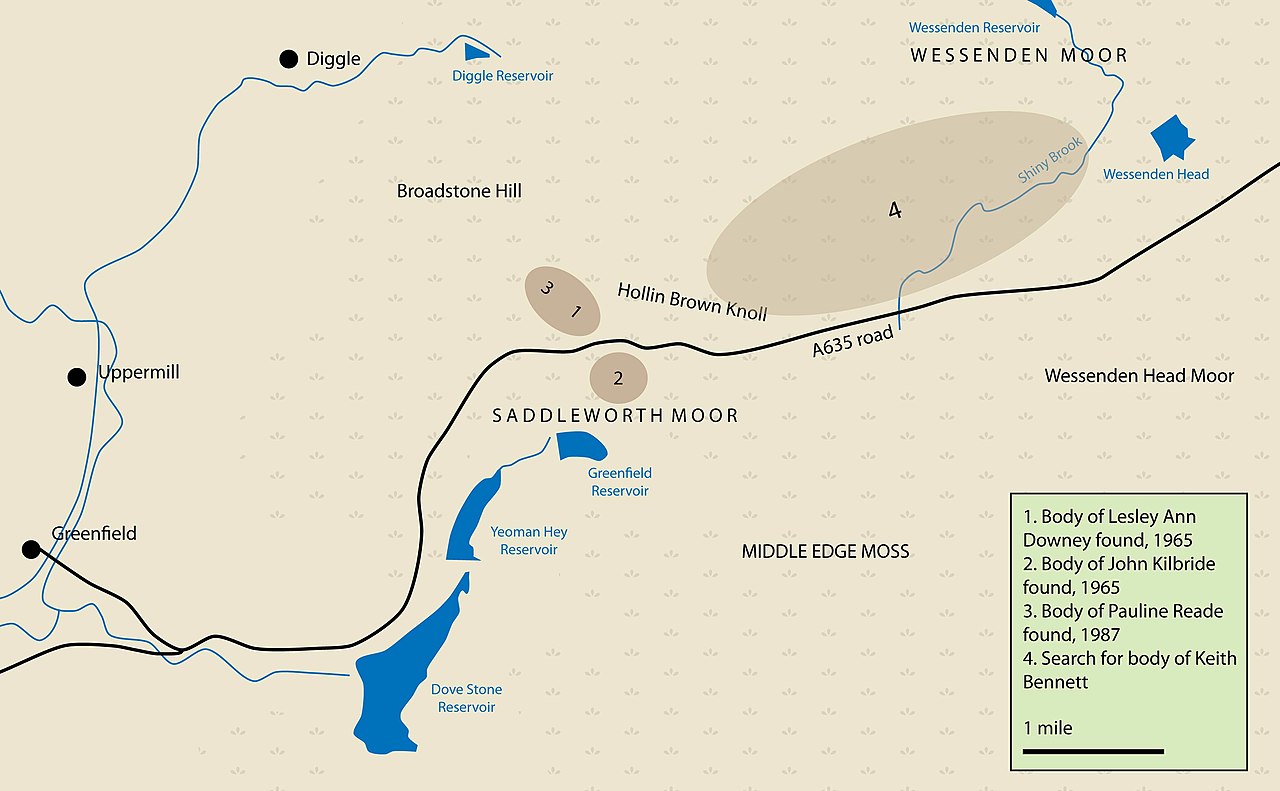
The Moors murders were a series of killings in and around what is now Greater Manchester, England, between July 1963 and October 1965. The crimes were committed by Ian Brady and Myra Hindley and drew intense national attention for their brutality and the young ages of most victims. The name refers to the moorland sites where some of the victims' bodies were discovered.
Image gallery
9 Images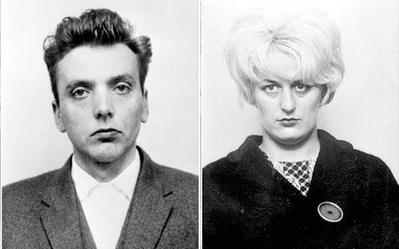


Victims
Five people are widely recognised as confirmed victims of the Moors murders. They included both children and a young adult. The principal victims are:
- Edward Evans
- Lesley Ann Downey
- John Kilbride
- Pauline Reade
- Keith Bennett
Investigation and trial
The investigation intensified after the discovery of remains on Saddleworth Moor and other locations. Police inquiries, forensics of the period and witness testimony led to arrests in 1965. At trial in 1966, Brady and Hindley were convicted of multiple murders and sentenced to life imprisonment, a verdict that provoked widespread media coverage and public debate.
Aftermath and legacy
The case had enduring effects on British criminal law, policing practices and debate about sentencing and parole for serious offenders. One victim's body was never recovered, a fact that prolonged grief for relatives and maintained public interest. Over subsequent decades the case generated books, documentaries and frequent discussion about the responsibilities of the media and the state toward victims' families.
Notable facts
The label "Moors murders" emphasises the location as much as the perpetrators. Statements and later interviews by one of the convicted individuals renewed attention at various times, and the case remains a reference point in discussions of child protection, investigative techniques and the ethical limits of publicity in murder trials.
Author
AlegsaOnline.com Moors murders Leandro Alegsa
URL: https://en.alegsaonline.com/art/127225