
Mikhail Leonidovich Gromov
French-Russian mathematician noted for major advances in metric geometry, geometric group theory and analysis; introduced ideas such as Gromov–Hausdorff convergence and hyperbolic groups; 2009 Abel Prize laureate.
Mikhail Leonidovich Gromov (born 23 December 1943) is a French‑Russian mathematician whose work reshaped several areas of modern geometry and its interfaces with analysis and algebra. He has held positions at the Institut des Hautes Études Scientifiques (IHÉS) in France and is a professor at New York University. His research is widely cited for introducing new concepts and methods that connect large‑scale geometric intuition with rigorous analytic and algebraic structure.
Image gallery
2 Images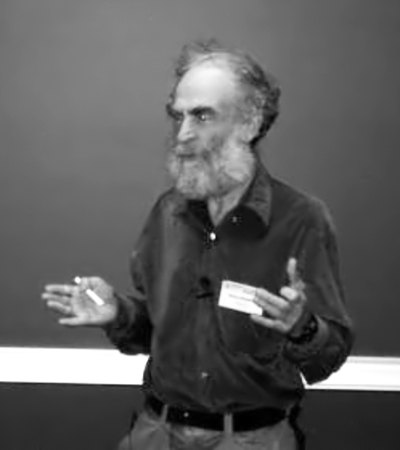

Major contributions
Gromov is best known for a set of foundational ideas that are now basic tools across geometry and topology. These include the Gromov–Hausdorff distance for comparing metric spaces, the notion of hyperbolic groups and coarse (or large‑scale) geometry, and deep rigidity and compactness theorems that relate curvature, volume and topology. He has also influenced analysis through techniques now used in partial differential equations and geometric measure theory.
- Metric geometry: Gromov–Hausdorff convergence provides a way to take limits of sequences of metric spaces and to study degenerations of geometric structures. (geometry)
- Geometric group theory: He formalized hyperbolic groups and proved structural results about groups with polynomial growth, linking algebraic properties to geometric behavior. (group theory)
- Analysis and symplectic geometry: His methods produced striking results in symplectic rigidity and influenced analytical approaches in geometry. (analysis)
Beyond individual theorems, Gromov is noted for an informal, highly geometric style of reasoning that blends intuition with surprisingly powerful abstract notions. This approach has spawned entire subfields, such as geometric group theory and systolic geometry, and has led to unexpected connections between previously separate problems.
Awards and influence
Gromov has received international recognition for his work, including a number of major awards. In 2009 he was awarded the Abel Prize for "revolutionary contributions to geometry". His papers and lectures have influenced generations of geometers, analysts and algebraists and continue to serve as a bridge between pure geometric insight and rigorous analytical technique.
For those seeking an entry point to his work, survey articles and lecture notes that explain the core concepts—Gromov–Hausdorff limits, hyperbolicity, filling invariants and growth of groups—are particularly useful. His contributions exemplify how abstract definitions can illuminate deep structural properties across mathematics.
Further reading and research resources can be found through institutional pages and collected papers at major research centers and universities. For institutional affiliations and selected publications see the pages of IHÉS and NYU, as well as standard mathematical literature databases. (geometry, analysis, group theory)
Author
AlegsaOnline.com Mikhail Leonidovich Gromov Leandro Alegsa
URL: https://en.alegsaonline.com/art/127039