
Melville W. Fuller — Chief Justice of the United States (1888–1910)
Melville Weston Fuller (1833–1910) served as the eighth Chief Justice of the United States from 1888 to 1910. A lawyer and Democratic politician, his court shaped late 19th-century commerce and civil-rights law.
Overview
Melville Weston Fuller (February 11, 1833 – July 4, 1910) was an American lawyer, jurist and political figure who served as the eighth Chief Justice of the United States from 1888 until his death in 1910. Nominated by President Grover Cleveland, Fuller led the Court during a period of rapid economic change and contentious constitutional questions about federal power, commerce and civil rights.
Image gallery
10 Images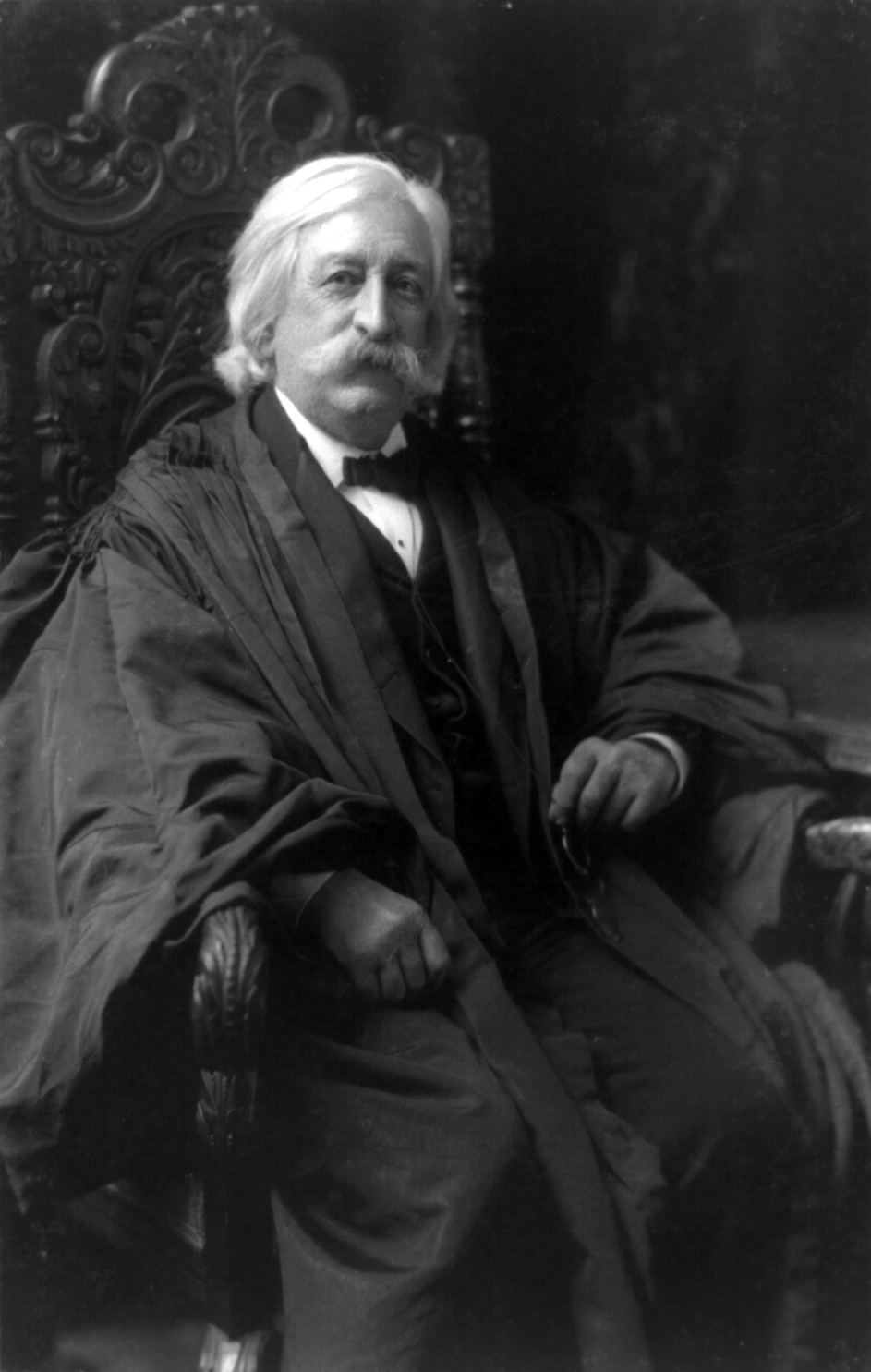


Early life and legal career
Fuller came of age in the mid-19th century and trained in the law before establishing a prominent private practice. He was active in Democratic politics and built a reputation as a skilled trial lawyer and organizer within his state. Before his elevation to the national bench, Fuller’s professional life combined courtroom work, civic involvement and participation in party affairs typical of prominent lawyers of his era.
Appointment and tenure
Appointed to the Court in 1888, Chief Justice Fuller presided over the Supreme Court for more than two decades, a tenure that bridged the Gilded Age and the opening of the 20th century. Under his leadership the justices decided cases that addressed the limits of federal and state regulation of business, taxation, and individual liberties. Fuller’s Court delivered a number of influential rulings that later shaped American constitutional doctrine.
Judicial approach and notable decisions
Fuller’s period on the bench is often associated with judicial restraint in certain areas and a cautious approach to expanding federal authority, alongside decisions that protected contract and property rights in ways critics later described as favorable to business interests. Landmark matters during his chief-justiceship included decisions that affected race relations and economic regulation; these cases remain central to legal histories of the era.
Reception and legacy
Scholars and commentators offer mixed assessments of Fuller’s legacy. Supporters emphasize his steadiness, administrative leadership and the Court’s role in an era of institutional consolidation. Critics point to rulings that, in retrospect, limited remedies for racial discrimination and constrained progressive regulation of the economy. Historians view his court as formative in debates that continued into the 20th century.
Death and further reading
Fuller died of a heart attack on July 4, 1910, in Sorrento, Maine. Accounts of his life and death place him among the long-serving chief justices whose decisions left a durable imprint on American law. For more detail, consult biographical and legal studies that examine individual opinions, the composition of the Court during his years, and the political context of his appointment.
- Role: Eighth Chief Justice of the United States (1888–1910)
- Profession: Trial lawyer, jurist, political figure
- Notable themes: federalism, economic regulation, civil-rights rulings
Further research can explore individual opinions issued during Fuller’s tenure, the changing composition of the Court, and how scholars interpret the long-term effects of decisions from the late 19th and early 20th centuries.
Author
AlegsaOnline.com Melville W. Fuller — Chief Justice of the United States (1888–1910) Leandro Alegsa
URL: https://en.alegsaonline.com/art/126622