
Max Weber: life, ideas, and influence on modern social science
Max Weber (1864–1920) was a German sociologist, political economist and public administration scholar whose concepts—bureaucracy, rationalization, authority types, and verstehen—shaped modern social science.
Maximilian Carl Emil Weber (21 April 1864 – 14 June 1920) was a German scholar whose work bridged sociology, political economy and public administration. Trained as a lawyer and social scientist, Weber combined historical comparison, philosophical reflection and interpretive analysis to examine how large-scale institutions shape individual action. His writing remains central to university curricula and to debates about bureaucracy, modernity and the relationship between culture and economic life. political economy
Image gallery
10 Images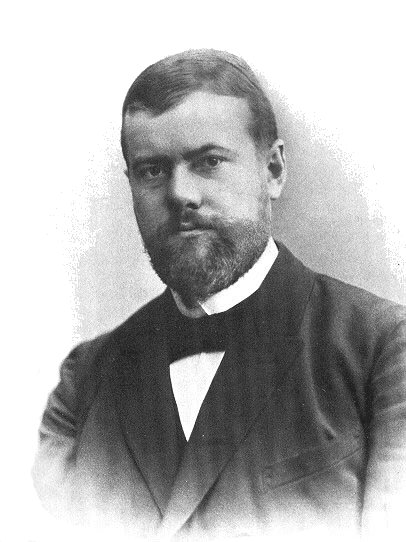



Ideas and core concepts
Weber emphasized the need to understand social action from the actor's point of view (verstehen) and developed analytical tools such as the "ideal type" to compare historical processes. He described stages of rationalization and offered a typology of legitimate authority—traditional, charismatic and legal-rational—that explains how power is organized in different societies. His account of bureaucracy analyzed how formalized, rule-based administration grows in modern states and organizations and what effects this has on freedom and efficiency. sociology
Major works and methods
Weber used comparative history, interpretive analysis and systematic theory building. Among his best-known publications are The Protestant Ethic and the Spirit of Capitalism, which links religious ideas to economic development, and Economy and Society, a broad, posthumous study of social institutions. He also wrote influential essays such as "Politics as a Vocation" and "Science as a Vocation," which discuss political leadership and the aims and limits of scholarly work. His method insisted that scholars distinguish empirical description from ethical judgment while acknowledging values shape research questions. public administration
Impact and relevance
Weber's concepts continue to inform sociology, political science, organizational studies and legal scholarship. His analysis of bureaucracy is a foundation for public administration theory; his authority typology is widely used in political sociology; and his work on religion and economy opened comparative studies of culture and development. Contemporary debates about technocracy, state authority and the cultural dimensions of capitalism still draw on Weberian categories.
Notable facts and distinctions
- Advocated an interpretive approach (verstehen) to grasp subjective meaning.
- Formulated the ideal type as an analytic device for comparing social phenomena.
- Highlighted tensions between rationalization and individual autonomy.
- Remains a central reference across humanities and social sciences. Further reading
Weber's work is valued for combining empirical research with normative sensitivity: he clarified how modern institutions operate without reducing social life to simple causal laws. His legacy is not only a body of concepts but a style of critical, comparative inquiry that still guides researchers and practitioners today.
Questions and answers
Q: Who is Max Weber?
A: Max Weber was a German political economist and sociologist who founded the modern study of sociology and public administration.
Q: When was Max Weber born?
A: Max Weber was born on April 21, 1864.
Q: When did Max Weber die?
A: Max Weber died on June 14, 1920.
Q: What is Max Weber's contribution to sociology?
A: Max Weber was considered one of the founders of the modern study of sociology.
Q: What is Max Weber's contribution to public administration?
A: Max Weber was also considered one of the founders of the modern study of public administration.
Q: What is Max Weber's nationality?
A: Max Weber was German.
Q: How do you pronounce Max Weber's name?
A: Max Weber's name is pronounced as "maks ˈveːbɐ".
Author
AlegsaOnline.com Max Weber: life, ideas, and influence on modern social science Leandro Alegsa
URL: https://en.alegsaonline.com/art/126523