
Max Horkheimer — Critical theorist of the Frankfurt School
German-born philosopher and sociologist (1895–1973) who shaped critical theory. Leader of the Frankfurt School, co-author of Dialectic of Enlightenment and critic of instrumental reason and the culture industry.
Overview
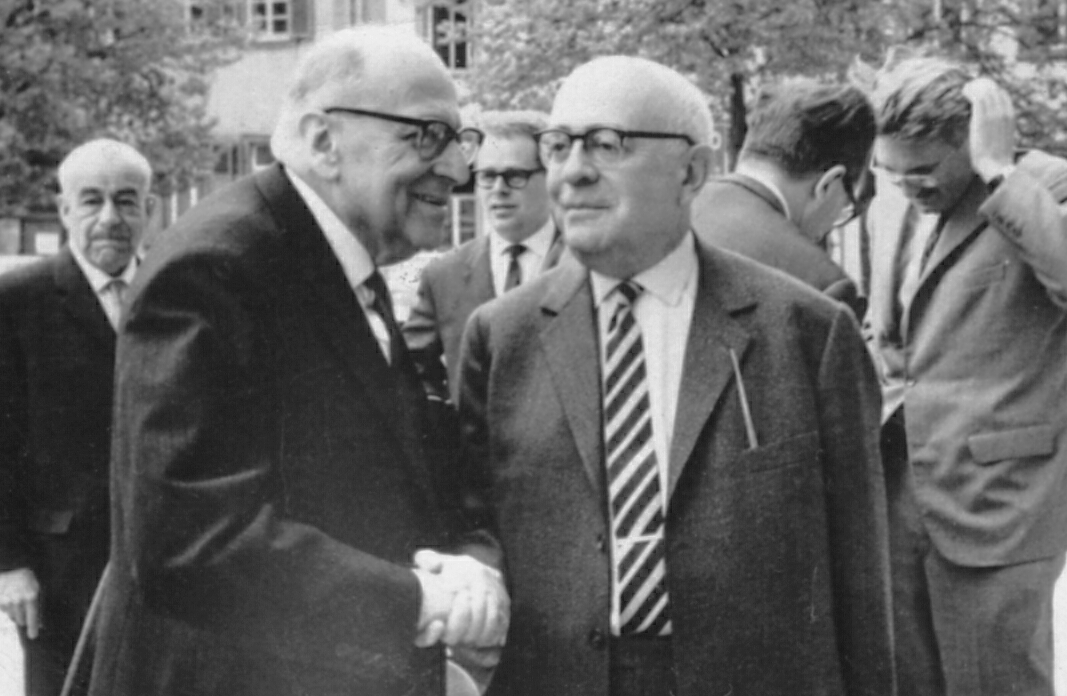
Max Horkheimer (14 February 1895 – 7 July 1973) was a German-born philosopher and sociologist who played a central role in the development of critical theory. As director and leading figure of the Frankfurt School he helped to shape an interdisciplinary approach to social theory that combined Marxist analysis, philosophy, and emerging social sciences. His work examined how reason, culture and power interact in modern societies.
Image gallery
3 Images
Central ideas and concepts
Horkheimer argued that social theory must be critical in the sense of diagnosing domination and pointing toward emancipation. Key themes in his thought include:
- Critical theory: an approach that interrogates social structures and ideology rather than simply describing facts.
- Instrumental reason: a critique of reason reduced to technical control, which undermines moral and reflective capacities.
- Culture industry: the idea that mass-produced culture standardizes tastes and reinforces social conformity.
- Dialectic: use of negative critique to reveal contradictions within Enlightenment and capitalist modernity.
Life and historical context
Horkheimer trained in philosophy and social sciences and worked with a circle of intellectuals who later became known as the Frankfurt School. The rise of authoritarianism in Europe in the 1930s forced the Institute for Social Research into exile; Horkheimer and colleagues continued their work abroad, especially in the United States, before returning to Germany after World War II. This experience of exile and return informed his reflections on culture, authority and modernity.
Major works and collaborations
Among Horkheimer's most influential writings are collaborative and solo works that analyze reason and culture. Notable publications include:
- Dialectic of Enlightenment (co-authored with Theodor W. Adorno) — a systematic critique of Enlightenment rationality and mass culture.
- Eclipse of Reason — an examination of how reason can be subordinated to instrumental ends.
Influence, uses and debates
Horkheimer's ideas influenced sociology, cultural studies, political theory and critiques of media and consumer culture. Scholars draw on his work to analyze ideology, social domination and the role of intellectuals. Critics have challenged some of his judgments as pessimistic or insufficiently attentive to democratic potentials, but his insistence on a morally engaged social theory remains widely cited.
Notable facts
Horkheimer collaborated with figures such as Theodor Adorno, Herbert Marcuse and Walter Benjamin, and led the Institute that became synonymous with critical theory. For further background on the Frankfurt School and related scholarship see Frankfurt School resources.
Author
AlegsaOnline.com Max Horkheimer — Critical theorist of the Frankfurt School Leandro Alegsa
URL: https://en.alegsaonline.com/art/126511