
Maurice Yaméogo: First President of Upper Volta (1959–1966)
Maurice Yaméogo (1921–1993) was the first president of the Republic of Upper Volta, leading the country through independence to a centralized, one-party government until his overthrow in a 1966 military coup.
Maurice Yaméogo (31 December 1921 – 15 September 1993) was a West African political leader who became the first president of the Republic of Upper Volta. He assumed leadership in 1959 and presided over the transition to independence in 1960, remaining in power until a military coup removed him in 1966.
Image gallery
10 Images


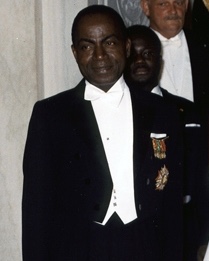

Early life and political rise
Born under French colonial rule, Yaméogo entered the emerging political scene in the late 1940s and 1950s as local representative institutions expanded. He rose through indigenous political networks and became the dominant civilian leader in Upper Volta during the final years of the colonial era, positioning himself as the head of a dominant party and the chief executive at independence.
Presidency: governance and policies
Yaméogo led a centralized administration and favored strong executive authority. His government consolidated power around a single party and restricted opposition activity. Economically and diplomatically, his regime maintained close ties with France and pursued policies intended to stabilize the new state, though critics later described these measures as economically austere and socially divisive.
Key features and events
- Oversaw formal independence of Upper Volta in 1960 and set the structures of the new republic.
- Instituted one-party dominance and reduced the institutional space for political rivals.
- Faced growing public unrest tied to economic hardship, perceived corruption, and unpopular fiscal measures.
1966 coup and aftermath
In January 1966 mass demonstrations and a loss of support within the security forces culminated in a military takeover led by Lt. Col. Sangoulé Lamizana. Yaméogo was deposed and removed from power. He was detained and subsequently spent periods outside the political mainstream; later years of his life were spent away from national leadership and he died in 1993.
Legacy and historical significance
Maurice Yaméogo is remembered for guiding his country into independence and for establishing a strong, centralized style of governance that proved controversial. His tenure illustrates early post-colonial tensions in francophone West Africa between single-party order, economic constraints, and rising demands for political participation. The country he led, once called Upper Volta, would later be renamed Burkina Faso and undergo additional political transformations in subsequent decades.
Author
AlegsaOnline.com Maurice Yaméogo: First President of Upper Volta (1959–1966) Leandro Alegsa
URL: https://en.alegsaonline.com/art/126473