
Bob Sheppard: The Longtime Public-Address Voice of New York Baseball and Football
Biography of Robert 'Bob' Sheppard (1910–2010), the New York Yankees and Giants public-address announcer known for his precise diction, long tenure, and cultural impact on American sports.
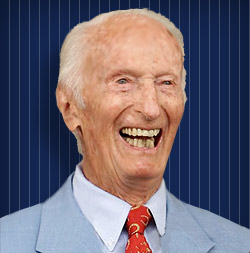
Robert Leo "Bob" Sheppard (October 20, 1910 – July 11, 2010) was an American public-address announcer best known for his long service with New York sports franchises. Hired in the early 1950s, he was the voice heard at Yankee Stadium for more than half a century and also announced at football games for the New York Giants. His clear, measured delivery and careful enunciation made him a distinctive figure in stadium culture and a familiar presence to generations of fans.
Image gallery
3 Images

Overview
Sheppard's career as a stadium announcer began in the postwar era and extended into the first decade of the 21st century. He combined a professional background in writing and education with a calm, resonant speaking style that emphasized proper names, respectful introductions, and consistency. That approach helped turn routine game introductions into a recognizable part of the live-sport experience, particularly at baseball games where the announcer's voice can become closely associated with a ballpark.
Career and roles
Sheppard worked as an announcer for the New York Yankees from 1951 until 2007 and for the New York Giants from 1956 until 2006. During those decades he announced tens of thousands of games, appearing behind the microphone for home openings, pennant races, World Series contests, and countless regular-season matchups. Although best known for his public-address work, contemporary accounts also describe him as having ties to journalism and education earlier in his life; he was often introduced in program notes and remembrances as a journalist and communicator.
Voice, style, and distinguishing traits
Observers praised Sheppard for several notable characteristics:
- Clear enunciation: He spoke names and lineups with deliberate clarity, avoiding slang or bombast.
- Measured pace: His calm tempo stood apart from more animated announcers, contributing to a dignified atmosphere.
- Consistency: Over decades his delivery remained steady, making it an iconic element of the stadium experience.
These qualities led to frequent references to his voice in print and broadcast accounts of games, and made him a recognizable figure beyond the stadium itself.
Legacy and recognition
Sheppard's long tenure made him a symbol of continuity as teams, players, and ballparks changed around him. He was publicly honored on multiple occasions by the teams he served and by fans who associated his voice with memorable moments of sport. Retirements, anniversaries, and special ceremonies acknowledged his contributions to game-day traditions, and oral histories and documentaries about baseball and football often cite his role in shaping the sound of live sports.
Personal life and education
Robert L. Sheppard was born in Richmond Hill, Queens. He completed his early schooling at St. John's Preparatory School and went on to study at St. John's University and at Columbia University. He lived most of his life in the New York area and maintained a reputation for professionalism and discretion. Sheppard was married twice, first to Margaret Sheppard until her death in 1959, with whom he had four children, and later to Mary Hoffman from 1961 until his death. He died on July 11, 2010, in Baldwin, New York, at the age of 99 from natural causes.
Timeline and associations
- Born October 20, 1910 in Richmond Hill, Queens, New York.
- Announcer for the New York Yankees (1951–2007).
- Announcer for the New York Giants (1956–2006).
- Studied at St. John's institutions and Columbia University; remembered for contributions to stadium announcing and civic life.
Bob Sheppard remains widely cited in discussions of sports broadcasting for the way a single, consistent public-address voice can shape the atmosphere of a ballpark or stadium. His example is often used to contrast theatrical, high-energy announcing styles with the restrained, formal tradition he embodied.
Related articles
Author
AlegsaOnline.com Bob Sheppard: The Longtime Public-Address Voice of New York Baseball and Football Leandro Alegsa
URL: https://en.alegsaonline.com/art/12522
Sources
- sports.espn.go.com : "Bob Sheppard, longtime Yankee Stadium announcer, dies at 99"