
List of rivers of Montenegro
An organized overview of Montenegro's rivers: major waterways by drainage basin, notable geographic features (Tara Canyon, Lake Skadar), uses, and cross‑border importance.
Montenegro is a mountainous country whose river network plays a central role in shaping its landscapes and human activities. Rivers rising in its highlands follow two main directions: some drain westward to the Adriatic Sea and others flow north and east toward the Danube basin. Short coastal streams, highland canyons and larger transboundary rivers all occur within a compact territory, giving Montenegro a rich mix of aquatic environments.
Image gallery
8 Images


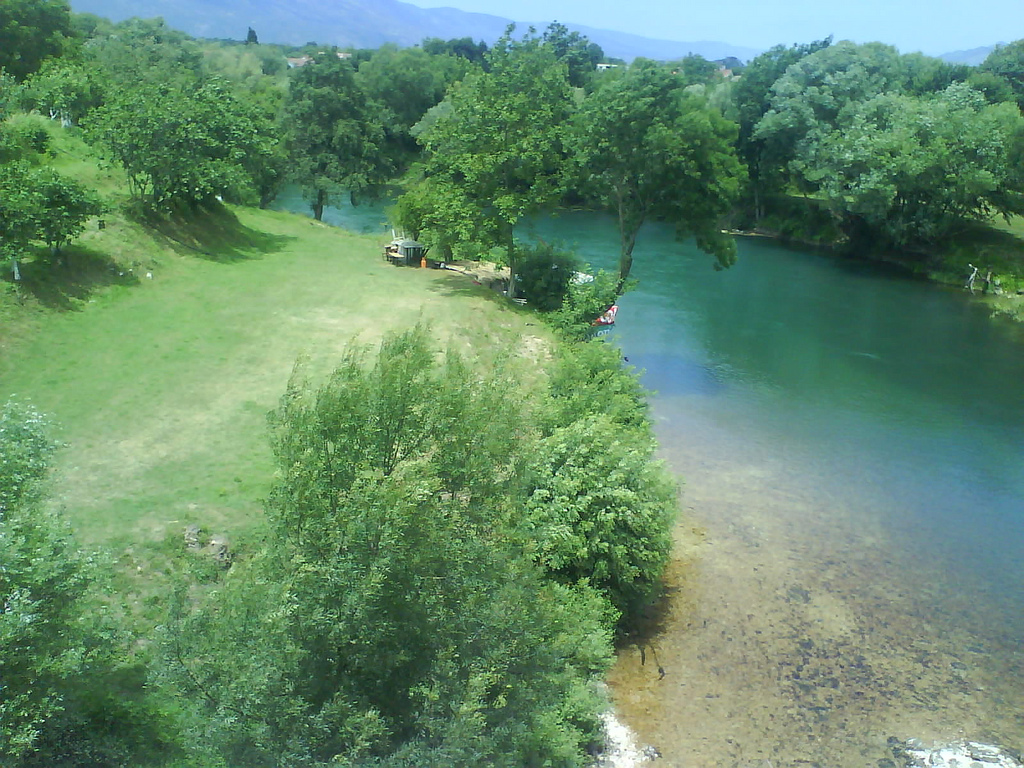
Major rivers by drainage basin
- Adriatic basin: Morača, Zeta, Bojana (Buna), Rijeka Crnojevića and several short coastal rivers that empty into the Adriatic or into Lake Skadar, which itself connects to the sea by the Bojana.
- Black Sea (Danube) basin: Tara, Piva, Lim and tributaries such as the Ćehotina; many of these continue beyond Montenegro into Bosnia and Serbia before contributing to the Danube system.
These groupings reflect watershed divides rather than administrative borders. Some rivers are entirely inside Montenegro while others form sections of international frontiers or pass quickly into neighboring states.
Notable features and examples
The Tara River is famed for its deep canyon, one of the most dramatic in Europe and a center for whitewater rafting and conservation. The Piva River has been engineered for hydropower, creating the Piva Lake reservoir; several tributaries and canyons in the north are also popular for outdoor recreation. Lake Skadar, fed by rivers such as the Morača and Rijeka Crnojevića, is the largest lake in the Balkans and a key wetland for birds and fisheries. The Bojana flows from Lake Skadar to the Adriatic and forms part of the border with Albania.
Rivers in Montenegro are valued for multiple uses: small hydroelectric plants, irrigation, freshwater fisheries, tourism (rafting, fishing, canyoning) and local transport in limited areas. Because many rivers cross borders, their water management requires international cooperation on issues like hydropower development, flood control and conservation.
For lists of individual rivers and further details on courses and tributaries, see the referenced overview: List of rivers of Montenegro. The waterways remain important for biodiversity, cultural identity and regional economies while reflecting the country’s rugged topography and climatic gradients.
Related articles
Author
AlegsaOnline.com List of rivers of Montenegro Leandro Alegsa
URL: https://en.alegsaonline.com/art/125047