
List of rivers of Niger
An overview and categorized list of Niger's rivers, including major perennial rivers, seasonal wadis (dallols), transboundary streams, and their importance to ecology and society.
This article provides an organized list and brief descriptions of the principal rivers and seasonal watercourses in the Republic of Niger. For general context about rivers worldwide see rivers. For information about the country and its geography, see Niger.
Image gallery
2 Images
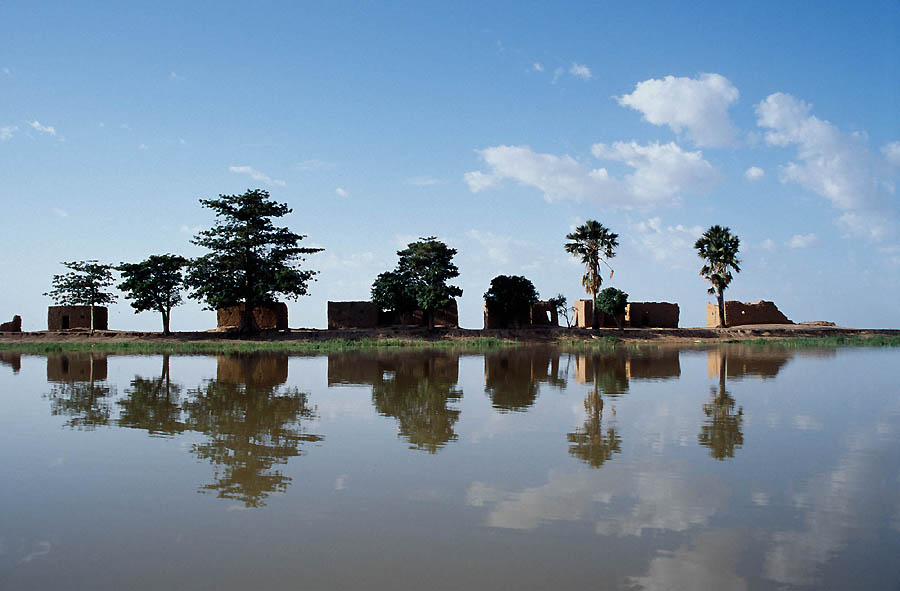
Overview
Niger's hydrography is dominated by the Niger River, which arcs through the western part of the country and supplies year-round flow. Much of Niger lies in the Sahel and Sahara zones, so many other named channels are ephemeral — they flow only in the rainy season and are often called dallols or wadis. Several rivers cross or form borders with neighbouring states, so Niger's watercourses are important in regional hydrology.
Major perennial rivers
- Niger River — The principal river in the country, providing year-round water for transportation, irrigation, fisheries and urban supplies.
- Komadougou Yobe — A seasonal to intermittent river that forms part of the Nigeria–Niger border and drains toward the Lake Chad basin in wetter years.
- Mékrou River — A transboundary tributary in the Niger–Benin–Burkina Faso area; important for local wetlands and cross-border conservation zones.
Seasonal rivers, dallols and wadis
Across southern and central Niger, many channels flow only during the rainy season. These are central to cropping, pastoral watering and groundwater recharge, but dry to dust in long dry seasons.
- Goulbi de Maradi — A seasonal stream in south-central Niger and adjacent Nigeria that supports local farming during rains.
- Dallol Bosso — A long, mostly dry valley running north–south that conducts floodwater and recharges local aquifers.
- Dallol Maouri — Another seasonal valley used for grazing and short-term agriculture in the Dosso region.
Uses, importance and issues
Rivers and seasonal channels in Niger are vital for irrigation, livestock, small-scale fisheries and drinking water. They sustain important wetland habitats and are focal points for towns and markets. Pressures include variable rainfall, overuse of surface and groundwater, soil erosion and occasional upstream abstraction; several development projects have sought to improve storage and irrigation while balancing environmental needs.
Notes and further information
This list highlights prominent and representative watercourses rather than every named stream. Local maps and hydrological surveys provide fuller, place-specific names and seasonal behaviour. For regional overviews consult hydrology resources and country profiles linked above.
Questions and answers
Q: What is the article about?
A: The article is about a list of rivers in Niger.
Q: Does the article mention the number of rivers in Niger?
A: No, it does not mention the number of rivers in Niger.
Q: Is the list of rivers in alphabetical order?
A: Yes, the list of rivers is in alphabetical order.
Q: Are the rivers listed in this article the only rivers in Niger?
A: It is unclear from the article whether these are the only rivers in Niger.
Q: Does the article provide any additional information about each river?
A: No, the article does not provide any additional information about each river.
Q: Is there a table or a visual aid included in the article?
A: No, there is no table or visual aid included in the article.
Q: Would this article be useful to someone looking to explore the rivers of Niger?
A: This article may be a helpful starting point for someone looking to explore the rivers of Niger, but they would likely need to do additional research to plan their trip.
Related articles
Author
AlegsaOnline.com List of rivers of Niger Leandro Alegsa
URL: https://en.alegsaonline.com/art/125054