
List of Pokémon species
An organized overview of the fictional Pokémon species from the Pokémon franchise, covering their classification, evolution, variations and cultural role; includes more than 800 known species.
Overview
“Pokémon” are fictional creatures that appear across a multimedia franchise encompassing video games, animation, cards and merchandise. Each distinct creature is termed a species or Pokémon, and collectively they form an index commonly referred to as a list of Pokémon. This list groups the many species introduced across successive releases and is used to identify, categorize and compare them.
Image gallery
2 Images
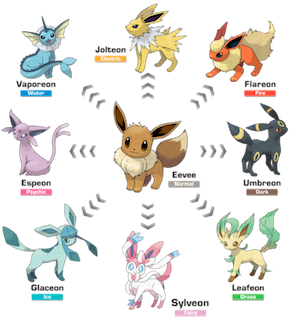
Characteristics and classification
Individual Pokémon species are defined by attributes such as appearance, base statistics, the elemental "type" or types they belong to (for example Fire, Water, Grass or Electric), typical habitats, and possible evolutionary relationships. Many species can evolve into other species, while some are single-stage. Additional traits include unique abilities, learnable moves, and size and weight ranges. Species also carry informal labels like "starter", "legendary" or "mythical", which describe their in-game roles or rarity.
Organization and indexing
The list of Pokémon is usually ordered by an in-universe index known as the Pokédex, which assigns a numeric identifier to each species within a particular region or generation. New generations of games add new species, regional forms, or alternate appearances, and special mechanics have introduced temporary or permanent form changes such as Mega Evolutions, Dynamax/Gigantamax, and regional variants. Compilations and online databases present sortable lists by type, generation, evolution family, or other filters.
History and origin
The franchise was conceived in the mid-1990s and launched as a pair of handheld video games. The concept of collecting creatures was inspired by naturalist hobbies, and the franchise expanded rapidly into television, films, a trading card game, and a wide range of licensed products. Over time the roster of species grew as new game installments introduced additional designs and gameplay roles.
Uses and cultural significance
Beyond their role inside games and stories, Pokémon species have become cultural icons: certain species serve as mascots, competitive gaming staples, or collectible card priorities. The list of species functions both as a practical reference for players and as a record of the franchise’s design evolution and commercial history. For an official overview of the franchise and its entries, see the Pokémon series.
Notable groups and variations
- Starter Pokémon: species commonly offered to new players at the beginning of a game.
- Evolution families: chains of species linked by evolution mechanics.
- Legendary and Mythical Pokémon: rare, often story-central species with unique status.
- Regional forms and alternate appearances: species that differ by region, form, or special mechanics.
The list of Pokémon remains a living index that reflects changes in game design and popular tastes. It is used by players, researchers of popular culture, and collectors to track species introductions, in-game attributes and notable appearances across media.
Related articles
Author
AlegsaOnline.com List of Pokémon species Leandro Alegsa
URL: https://en.alegsaonline.com/art/124912
Sources
- www5f.biglobe.ne.jp : "キメわざポケモンキッズDP6"
- pokemon-2u.com : "Meiji VS Cards"
- ptcg.creatures.co.jp : "Index of /wp-content/uploads/2010/12"
- pokemon-sp.jp : "かくれとくせい」にクローズアップ!"
- www2.ucatv.ne.jp : "丸美屋ゲットシール"
- pokemon-2u.com : "Meiji Blue Cards"
- ppg.canon.jp : "ポケモンプリントギャラリー"