
Notable Physicists: Key Figures in Classical, Quantum, and Modern Physics
Directory of influential physicists across classical, quantum, and modern physics, offering concise biographies, key contributions, and areas of specialization for students and researchers.
A directory of individuals who have made significant contributions to the science of matter, energy, space, and time is commonly described as a list of physicists. Such a compilation can serve as a reference for students, researchers, and the general public interested in the people behind major discoveries and theories in physics.
Image gallery
2 Images
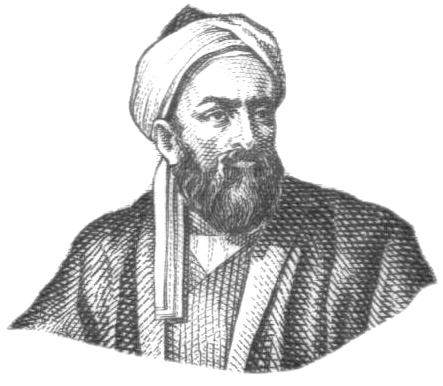
Purpose and scope
The goal of a comprehensive list of physicists is to document researchers, teachers, and experimenters whose work has advanced understanding in areas that include classical mechanics, electromagnetism, thermodynamics, quantum theory, relativity, particle physics, condensed matter, and interdisciplinary fields. Entries may range from early natural philosophers to contemporary researchers working in theoretical and experimental domains.
Organization and formats
Lists of physicists are typically organized in one or more of these ways:
- Chronologically, to show the development of concepts over time.
- By specialization, grouping physicists by fields such as astrophysics, nuclear physics, or biophysics.
- Alphabetically, for straightforward lookup.
- By recognition or awards, for example Nobel Prize laureates in physics.
Historical periods
To reflect changes in methods and focus, the list can be subdivided into broad historical eras:
- Ancient and medieval thinkers who laid foundations for natural philosophy.
- Early modern scientists of the 16th–18th centuries who formalized experimental methods and mathematical description.
- 19th-century physicists who developed electromagnetic theory, thermodynamics, and statistical mechanics.
- 20th-century pioneers of relativity and quantum mechanics and subsequent developments in high-energy and condensed-matter physics.
- Contemporary researchers advancing experimental techniques and theoretical frameworks across many subfields.
Specializations and interdisciplinary work
Physics overlaps with many other disciplines. It is useful to indicate when an individual’s work is primarily:
- Theoretical — focused on mathematical models and conceptual frameworks.
- Experimental — centered on laboratory or observational discovery and measurement.
- Applied — connecting physical principles to technology and engineering.
- Interdisciplinary — involving biology, chemistry, materials science, or computation.
Representative figures
Below are a few widely recognized physicists chosen to illustrate the range of contributions across eras and specialties. This is not an exhaustive roster but rather a sample to show the kinds of entries such a list might include.
- Isaac Newton — formulated classical mechanics and universal gravitation.
- James Clerk Maxwell — unified electricity and magnetism in a set of equations.
- Michael Faraday — established experimental foundations for electromagnetic induction.
- Albert Einstein — developed the theories of special and general relativity and contributed to quantum theory.
- Marie Curie — conducted pioneering research on radioactivity and won Nobel Prizes in physics and chemistry.
- Niels Bohr — introduced a model for atomic structure and contributed to quantum theory.
- Erwin Schrödinger and Werner Heisenberg — key developers of quantum mechanics.
- Richard Feynman — advanced quantum electrodynamics and was an influential educator.
- Enrico Fermi — made foundational contributions to nuclear physics and particle physics.
- Emmy Noether — established deep connections between symmetries and conservation laws in physics.
- Maria Goeppert Mayer — developed the nuclear shell model.
- Stephen Hawking — worked on black hole physics and cosmology.
- Kip Thorne and Peter Higgs — examples of late twentieth-century theorists whose ideas influenced modern physics (Higgs proposed a mechanism for particle masses; Thorne contributed to gravitational-wave astrophysics).
Criteria for inclusion
A practical set of criteria helps determine who appears on a general list of physicists. Typical considerations include:
- Documented contributions that altered or extended physical knowledge, through publications, patents, or widely recognized discoveries.
- Professional identification as a physicist, researcher, or teacher in physics or closely related fields.
- Historical or educational significance, such as introducing methods or mentoring influential students.
- Recognition by the scientific community, for example through awards, citations, or leadership in research institutions.
Maintaining and expanding the list
Because physics is a dynamic field, lists need periodic review to add emerging contributors and to refine classification. Clear sourcing and concise descriptions for each entry improve the list’s usefulness and reliability.
Usage notes
Readers seeking a specific person or topic should check how the list is arranged (by name, era, or subject). For detailed biographies and bibliographies, consult specialized biographies, scholarly databases, and authoritative historical works in the history of science.
Related articles
Author
AlegsaOnline.com Notable Physicists: Key Figures in Classical, Quantum, and Modern Physics Leandro Alegsa
URL: https://en.alegsaonline.com/art/124905