
Leon Lederman (1922–2018) — experimental physicist and educator
Leon Lederman was an American experimental physicist best known for co-discovering the muon neutrino, directing Fermilab, winning the 1988 Nobel Prize, and promoting science education.
Leon Max Lederman (July 15, 1922 – October 3, 2018) was an American experimental physicist whose work helped define particle physics in the mid‑20th century. He is widely remembered for experiments that identified distinct types of neutrinos and for leadership roles that shaped laboratory practice and science outreach. Born in New York City, Lederman combined laboratory skill with a talent for explaining complex ideas to non‑specialists.
Image gallery
4 Images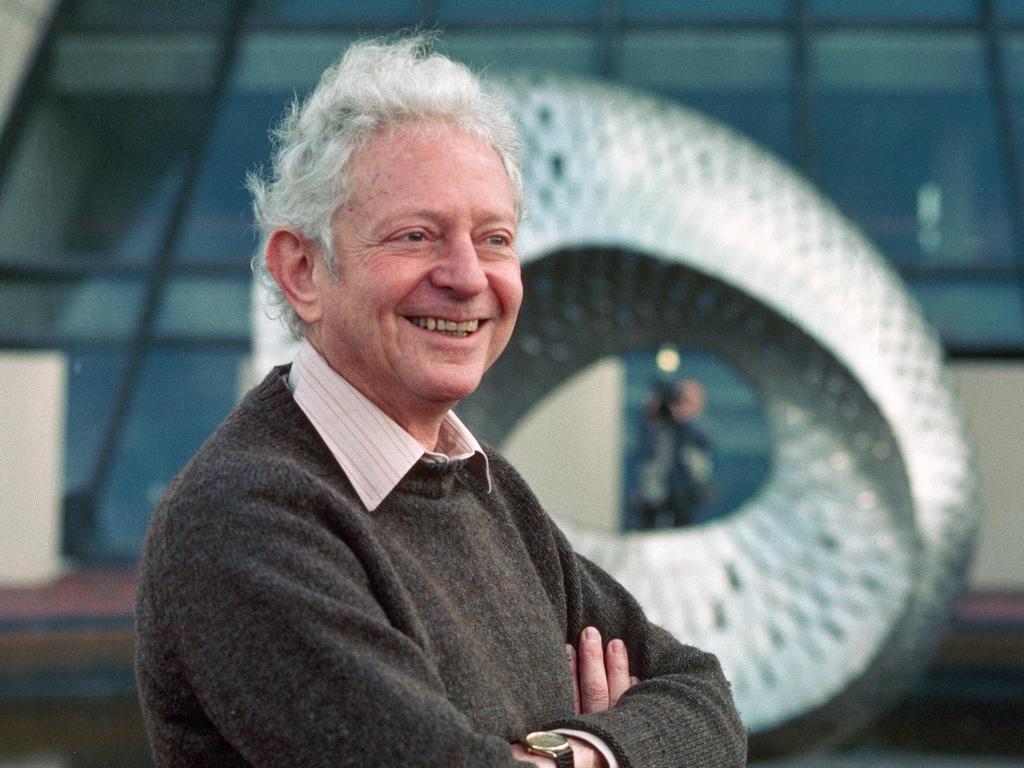


Scientific contributions
Lederman was a central figure in experiments that established the muon neutrino as a particle distinct from the electron neutrino. That discovery, produced with collaborators including Melvin Schwartz and Jack Steinberger, clarified the lepton family structure and earned them the Nobel Prize in Physics in 1988. Earlier and later work touched on the properties of quarks and leptons and on the development of beam and detector techniques that became standard in accelerator physics.
Career and leadership
Lederman helped run and design major experiments at national laboratories and served as director of Fermilab, where he played a key role in planning facilities and fostering large collaborations. He also contributed to the experimental techniques—particle beams, target systems and electronic detectors—used to probe high‑energy collisions and rare processes. His collaborations influenced how modern particle experiments are organized.
Education, writing and outreach
Beyond the laboratory, Lederman was an energetic advocate for science education. He wrote for general audiences and participated in public discussions about basic research and its societal value. His popular writing brought attention to particle physics and helped generate public interest in topics such as neutrinos and the search for fundamental particles.
Honors, personal life and death
- Co-recipient of the Nobel Prize in Physics (1988) with Schwartz and Steinberger.
- Recipient of the Wolf Prize in Physics (1982), shared with Martin L. Perl, for contributions to the understanding of quarks and leptons.
Lederman was of Jewish descent and described himself as an atheist in public statements. In later years he suffered from dementia; he died on October 3, 2018 at a care facility in Rexburg, Idaho (location note) from complications related to that condition (health note).
Legacy
Lederman's legacy rests on a combination of experimental discovery, institutional leadership and efforts to broaden scientific literacy. His work on neutrinos and detector technology remains foundational for ongoing neutrino experiments and for the study of the Standard Model of particle physics. For further basic biographical and scientific background see linked resources.
Related articles
Author
AlegsaOnline.com Leon Lederman (1922–2018) — experimental physicist and educator Leandro Alegsa
URL: https://en.alegsaonline.com/art/124253
Sources
- newsweek.com : What We'll Find Inside the Atom