
Julian of Norwich
English medieval anchoress and mystic (c.1342–c.1416), author of Revelations of Divine Love—an early English spiritual work notable for its optimistic theology and the phrase “All shall be well.”
Julian of Norwich (c.1342–c.1416) was a medieval English mystic and religious recluse whose writings have become central to the study of Christian mysticism. Living as an anchoress attached to a church in Norwich, she recorded a series of visions that she called her “shewings” and later composed them into a sustained theological text now known as Revelations of Divine Love.
Image gallery
10 Images



Life and historical setting
Little is known of Julian’s personal life beyond a few documentary hints. She appears to have experienced her visions during a severe illness around 1373 and to have taken permanent enclosure in a cell attached to the Church of St Julian in Norwich. Her lifetime spanned a tumultuous period in England—plague, social unrest, and war—which shaped the concerns of many late medieval religious writers.
Writings and manuscripts
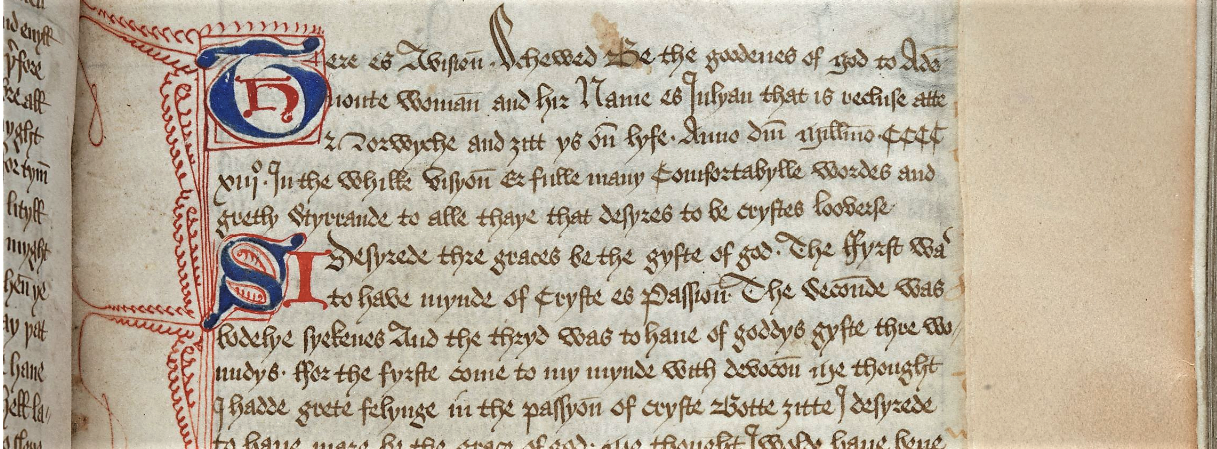
Julian produced two linked works. Scholars distinguish a Short Text, written soon after her revelations, and a more elaborate Long Text that she revised decades later. These compositions are written in Middle English and survive in several manuscript copies. They combine narrative accounts of visionary experiences with theological reflection and pastoral counsel.
Themes and theology
Julian’s theology emphasizes God’s intimate, maternal love and the ultimate reconciliation of creation with its creator. She is best known for the consolatory phrase often quoted in devotional contexts: "All shall be well, and all shall be well, and all manner of things shall be well." Her reflections balance realism about human suffering with persistent confidence in divine mercy.
Importance and influence
Revelations of Divine Love is widely regarded as the earliest surviving book in English known to have been written by a woman. Julian’s work has influenced readers across centuries: medieval pilgrims and her contemporaries sought spiritual counsel from enclosed holy women; later theologians, poets, and modern spiritual seekers have drawn on her imagery and hope-filled language.
Legacy and modern study
Julian of Norwich occupies a prominent place in studies of medieval spirituality, women's religious history, and Christian theology. Her balanced combination of mystical experience and theological reflection continues to attract attention from scholars, clergy, and lay readers, and her writings are frequently cited in discussions of compassion, suffering, and the feminine language for the divine.
Related articles
Author
AlegsaOnline.com Julian of Norwich Leandro Alegsa
URL: https://en.alegsaonline.com/art/123114