
Julia Gillard — Australia’s first female Prime Minister
Overview of Julia Gillard: her background, rise in the Australian Labor Party, service as Prime Minister (2010–2013), major policies, controversies, and later activities in public life.
Julia Eileen Gillard (born 29 September 1961) is an Australian politician best known for serving as the nation's 27th Prime Minister. Born in Barry, Wales, she emigrated to Australia as a child and rose through the ranks of the Australian Labor Party to occupy its leadership. Her tenure marked several firsts: she was the first woman to hold the prime ministership and the first prime minister in many decades who was not born in Australia. For a concise official summary see biographical profile.
Image gallery
10 Images
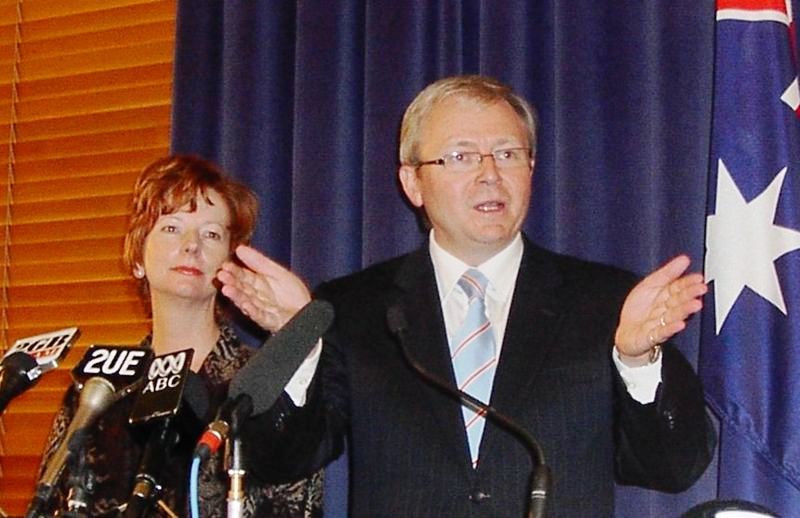


Early life and entry into politics
Gillard's family moved to Australia when she was young and she completed her education and early legal training in Victoria. She entered federal politics in the late 1980s, winning a seat in the House of Representatives to represent a western Melbourne electorate. Her steady rise included roles inside party organizations and later ministerial portfolios. Her parliamentary electorate and local work are summarized at constituency information.
Labor leadership and path to the prime ministership
After serving in senior government positions, including a deputy leadership role, Gillard became leader of the Australian Labor Party and prime minister following an internal party leadership change in 2010. Before becoming party leader she had been deputy to Kevin Rudd and acted in the top office on occasions when he was absent. Contemporary coverage of those leadership events is available at Kevin Rudd and party records at Labor Party.
Government, policies and parliamentary context
Gillard led a minority government for much of her term, relying on negotiated support from independent and crossbench members after a closely contested federal election. Her government pursued a range of domestic policy reforms, notably in education funding and climate policy, and introduced measures that required compromise across parliament. Key policy debates and institutional arrangements from her time in office are discussed at Prime Ministerial archives.
Controversies, public profile and notable moments
Gillard's leadership generated intense public and media debate. She faced internal party rivalry that eventually resulted in a leadership spill, and she gave public speeches that drew international attention. Political commentators and records provide background on those events; see contemporary analyses at historic comparisons and executive office summaries.
Later life and legacy
After leaving elected office, Gillard remained active in public life through advocacy, writing and work with international education and policy organizations. She has participated in academic and global forums and published a memoir describing her time in politics. For an outline of her subsequent roles consult post‑government activities and organizational profiles at Labor and international partners.
Distinguishing facts
- First woman to serve as Australia’s prime minister.
- One of the few 20th/21st-century Australian prime ministers born outside Australia.
- Served in senior ministerial roles before leading the government and later returned to public engagement and writing.
Gillard's premiership remains a subject of study for those examining gender and leadership, party dynamics, minority governments and policy compromise in modern parliamentary systems. For further formal references and institutional material use the links above, which connect to official summaries and historical resources.
Questions and answers
Q: Who is Julia Eileen Gillard?
A: Julia Eileen Gillard is an Australian politician who was the 27th Prime Minister of Australia.
Q: What was notable about Gillard's tenure as Prime Minister?
A: Gillard was the first female Prime Minister of Australia and also Australia's first unmarried prime minister.
Q: Who was the last non-Australian-born prime minister before Gillard?
A: The last non-Australian-born prime minister before Gillard was Billy Hughes, who served from 1915 to 1923.
Q: When did Gillard become the leader of the Australian Labor Party?
A: Gillard became the leader of the Australian Labor Party on 24 June 2010 when Kevin Rudd resigned.
Q: What was Gillard's role before becoming Prime Minister?
A: Before becoming Prime Minister, Gillard had been Deputy Prime Minister under Kevin Rudd.
Q: When did Gillard become acting prime minister?
A: Gillard became the acting prime minister on 11 December 2007 when Kevin Rudd went to the United Nations Climate Change Conference in Bali.
Q: Where did Gillard represent in the House of Representatives?
A: Gillard represented the Division of Lalor in the western suburbs of Melbourne in the House of Representatives since 1988.
Related articles
Author
AlegsaOnline.com Julia Gillard — Australia’s first female Prime Minister Leandro Alegsa
URL: https://en.alegsaonline.com/art/123120
Sources
- theaustralian.com.au : "Let's wait and see on marriage, says Julia Gillard's partner"
- theaustralian.com.au : "Julia Gillard 'honoured' to become prime minister as Kevin Rudd stands aside"
- abc.net.au : "Gillard makes Aust history as female acting PM"
- aph.gov.au : "The Hon Julia Gillard MP, Member for Lalor (Vic)"
- abc.net.au : "Australian Story - Julia Gillard Interview Transcript"
- abc.net.au : Transcript
- bbc.co.uk : The changing face of the average Aussie
- news.google.com.au : "Room at the top on the campus"
- history.law.unimelb.edu.au : "Julia Gillard"
- themonthly.com.au : "The Other Biography: Jacueline Kent's "The Making of Julia Gillard" by Christine Wallace"
- theage.com.au : "Focus and ambition drive her success"
- perthnow.com.au : "Julie Bishop and Julia Gillard clash"
- heraldsun.com.au : "Will Julia Gillard's past cause red faces?"
- aph.gov.au : "Personal Perspectives on Parliament Lower House: Lower House"