
Jorge Rafael Videla
Argentine Army general who governed as head of a military junta from 1976–1981; his regime carried out widespread repression during the 'Dirty War' and he was later tried and convicted.
Overview
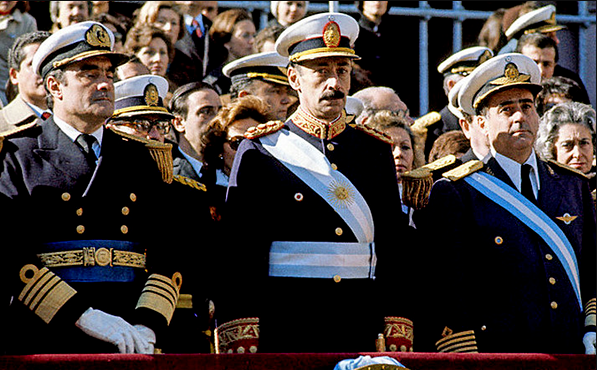
Jorge Rafael Videla (2 August 1925 – 17 May 2013) was an Argentine Army general who became de facto President of Argentina after a 1976 coup. He led the military government known as the National Reorganization Process from 1976 until 1981. His rule is associated with a program of political repression, institutional restructuring and economic change.
Image gallery
9 Images



Rule and policies
The Videla government sought to eliminate leftist political opposition and perceived subversion. Economically, the regime favored market-oriented measures, deregulation and suppression of powerful labor organizations. The military centralized control of state institutions, purged public bodies of dissenters and promoted a security-first approach to governance.
Human rights abuses
Videla's administration carried out widespread state repression during what is commonly called the "Dirty War." Security forces used clandestine detention centers, torture, secret trials and forced disappearances of suspected dissidents. Human rights organizations and domestic protest movements, such as the Mothers of the Plaza de Mayo, emerged in response to the disappearances and abuses.
Legal proceedings and death
After democracy returned to Argentina in 1983, Videla was tried and convicted in connection with human rights violations. He received a life sentence in the landmark prosecutions of military leaders; later developments included pardons and renewed prosecutions in the 2000s. Videla died in custody in 2013 while serving sentences for crimes against humanity.
Legacy and notable facts
- The period of military rule under Videla remains a central reference point in Argentine memory and politics.
- Estimates of victims vary; many sources cite thousands—often an estimated figure of about 30,000 is referenced in public debate—though totals and methodologies are contested.
- The trials of the military juntas established important precedents in transitional justice and accountability for state-sponsored abuses.
Videla's tenure continues to shape discussions about civil-military relations, human rights, and historical memory in Argentina and beyond.
Related articles
Author
AlegsaOnline.com Jorge Rafael Videla Leandro Alegsa
URL: https://en.alegsaonline.com/art/122815
Sources
- bbc.co.uk : "Argentina ex-military leader Jorge Rafael Videla dies"