
Jordi Pujol — Catalan politician and long-serving President of Catalonia
Catalan nationalist leader Jordi Pujol (born 1930) led CDC, served as President of Catalonia (1980–2003), shaped regional autonomy and language policy, and later faced financial controversies.
Jordi Pujol i Soley (born 9 June 1930) is a Spanish Catalan politician widely associated with the post-Franco restoration of Catalan institutions and regional self-government. He led the centre-right nationalist party Convergència Democràtica de Catalunya (CDC) from 1974 until 2003 and served as President of the Generalitat de Catalunya from 1980 to 2003. His long tenure made him one of the most influential figures in modern Catalan politics.
Image gallery
3 Images

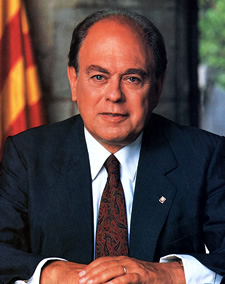
Early life and political rise
Pujol was born in Barcelona and became active in Catalan cultural and political circles during and after the Franco dictatorship. He helped found CDC in the 1970s as Spain transitioned to democracy, positioning the party as a defender of Catalan language and autonomy while appealing to moderate and conservative voters. Through coalition-building and repeated electoral success, Pujol emerged as the leading representative of a new generation of regional leadership.
Presidency and policies
As president, Pujol oversaw the consolidation of autonomous government institutions, expansion of Catalan-language education and public broadcasting, and policies aimed at economic modernization. His administrations promoted infrastructure development, industrial renewal, and cultural initiatives intended to reinforce Catalonia’s distinct identity within the Spanish state. These priorities helped shape everyday public life and the region’s political landscape for decades.
Notable initiatives
- Strengthening the Generalitat and its public services after the transition to democracy.
- Promoting Catalan language use in schools and administration.
- Encouraging economic diversification and regional investment.
- Building a broad centrist-nationalist coalition that dominated regional politics.
Later years and controversies
After leaving the presidency and stepping down as CDC leader, Pujol’s reputation was affected by financial scandals that emerged in the 2010s. In 2014 he acknowledged that he and members of his family had maintained undeclared funds abroad for many years; subsequent investigations and legal scrutiny focused on family finances and alleged irregularities. These events provoked intense public debate about ethics, transparency and corruption in regional politics.
Legacy and significance
Pujol’s legacy is mixed: he is credited with rebuilding Catalan institutions, normalizing the public role of the Catalan language, and shaping a durable political movement, yet his standing was later damaged by financial revelations. His career illustrates both the consolidation of regional autonomy in post-Franco Spain and the challenges of political accountability in longstanding power structures. For further background and primary sources, see related resources.
Related articles
Author
AlegsaOnline.com Jordi Pujol — Catalan politician and long-serving President of Catalonia Leandro Alegsa
URL: https://en.alegsaonline.com/art/122798
Sources
- jordipujol.cat : "A biography of Jordi Pujol - Activist"