
John Backus: Pioneer of High-Level Programming and Formal Syntax
Overview of John W. Backus, leader of the team that created FORTRAN, inventor of Backus–Naur Form (BNF), and recipient of the National Medal of Science and the ACM Turing Award.
John Warner Backus (December 3, 1924 – March 17, 2007) was an American computer scientist whose work shaped early programming practice and language theory. He led the development of the first widely used high-level programming language, FORTRAN, and later created a concise notation for describing syntactic structure known as Backus–Naur Form (BNF). His career combined practical systems work with reflection on programming foundations.
Image gallery
1 Image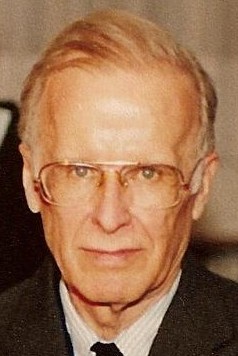
FORTRAN and the move to high-level languages
In the 1950s Backus directed a team at IBM that produced FORTRAN, designed to let scientists and engineers express numerical algorithms in a form closer to mathematical notation. FORTRAN popularized the idea of compiling human-readable statements into efficient machine code and demonstrated that high-level languages could deliver both programmer productivity and execution speed. This achievement helped establish the compiler as a central piece of software engineering.
Backus–Naur Form and language description
Following his work on language implementation, Backus developed a formal notation to describe the syntax of programming languages. Backus–Naur Form, often abbreviated BNF, provides a compact, grammar-based way to specify legal program constructs and has been widely adopted for language standards, documentation, and parser generation. BNF remains a foundational tool in programming language design and education.
Research, critique, and later work
Later in his career Backus turned to more theoretical concerns. He criticized the dominance of von Neumann programming styles and advocated for higher-level, function-oriented approaches to computation. His influential essay proposed alternatives that emphasized compositional operators and more mathematically tractable program forms. Throughout, Backus combined empirical achievements with conceptual inquiry.
Awards and recognition
For his technical contributions and lasting influence on computing, Backus received major honors, including the National Medal of Science in 1975 and the ACM Turing Award in 1977. These awards recognized both the practical importance of FORTRAN and the theoretical impact of his ideas about language definition and program design.
Legacy and influence
- FORTRAN established many compiler techniques and encouraged widespread adoption of high-level languages (high-level programming languages).
- BNF remains a standard way to communicate grammar rules for languages, data formats, and protocols.
- Backus's later critiques stimulated research into functional and declarative programming paradigms.
Together, these contributions make John Backus a central figure in the transition from low-level machine programming to the language-centered software engineering that underpins modern computing.
Related articles
Author
AlegsaOnline.com John Backus: Pioneer of High-Level Programming and Formal Syntax Leandro Alegsa
URL: https://en.alegsaonline.com/art/122344
Sources
- computer.org : "W. Wallace McDowell Award" · web.archive.org
- nsf.gov : "The President's National Medal of Science: John Backus"
- acm.org : "ACM Turing Award Citation: John Backus" · web.archive.org