
Harald Fairhair (Harald Hårfagre)
Traditional first king of Norway whose life and deeds are known mainly from later medieval sagas; credited with unifying many Norwegian petty kingdoms, though details remain debated by historians.
Overview
Harald Fairhair (Old Norse: Harald Hárfagri; c. 850–c. 932) is presented in medieval Scandinavian tradition as the first king to rule a substantial portion of what is now Norway. Later sources describe him as a unifier who subdued regional chieftains and established a royal lineage. These accounts have made him a central figure in Norwegian national memory and medieval royal genealogy.
Image gallery
9 Images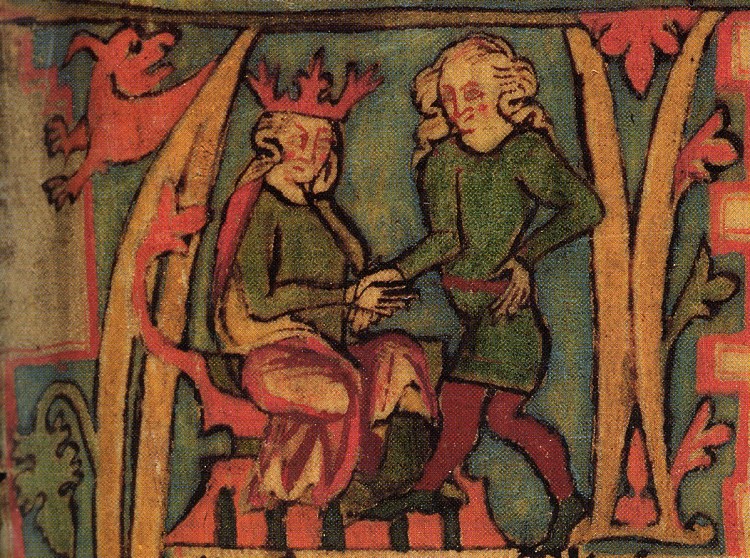


Life, reign and traditional narrative
According to the saga tradition, Harald came to prominence during the later ninth century and won a decisive victory that consolidated power in western Norway. The Battle of Hafrsfjord is commonly cited in later texts as the pivotal engagement that brought many petty kings under his rule. He is given the epithet "Fairhair" in narratives that tell how he vowed not to cut his hair until he had secured power, an element that belongs more to legendary biography than to verifiable history.
Sources and historicity
Most details about Harald's life come from Icelandic and Norwegian sagas written two to three centuries after the events they describe. Important prose sources include Snorri Sturluson's Heimskringla and earlier summaries such as Ágrip and Historia Norwegie. Because these works mix oral tradition, genealogy, and literary invention, modern scholars treat many specifics—chronology, exact battles, and personal relationships—with caution. Archaeological and contemporaneous continental records offer limited confirmation for a single dominant ruler at the date conventionally ascribed to Harald.
Legacy and significance
Whether or not all saga details are historically accurate, Harald Fairhair functions as a founding figure in medieval Scandinavian political thought. Later kings traced descent to him to legitimize their rule, and nineteenth- and twentieth-century Norwegian historiography and cultural revival adopted him as a symbol of national unity. At the same time, historians emphasize a gradual process of consolidation rather than a single, sudden unification.
Key points and further reading
- Traditional accounts link Harald to a decisive victory at Hafrsfjord and to the unification of many petty kingdoms.
- Primary narrative sources are medieval sagas and summaries written centuries after his supposed reign.
- Modern scholarship favors a careful, evidence-based reconstruction that distinguishes legend from probable historical events.
- For perspectives rooted in later national traditions see Norwegian tradition and medieval Icelandic literature collected in Icelandic sources.
For readers seeking an introduction, surveys of Viking Age polity formation and the saga literature provide useful context for understanding how Harald Fairhair came to occupy his prominent place in Scandinavian historical imagination.
Related articles
Author
AlegsaOnline.com Harald Fairhair (Harald Hårfagre) Leandro Alegsa
URL: https://en.alegsaonline.com/art/120312