
Greg Lake — English singer, songwriter and progressive rock musician
Greg Lake (1947–2016), English singer, bassist and guitarist; founding member of King Crimson and frontman of Emerson, Lake & Palmer, noted for songs like "Lucky Man" and a distinctive baritone voice.
Gregory Stuart "Greg" Lake (10 November 1947 – 7 December 2016) was an English musician whose voice and songwriting helped define early progressive rock. He was born in Poole, Dorset, and began performing professionally in the mid-1960s, quickly moving from local bands to national attention.
Image gallery
7 Images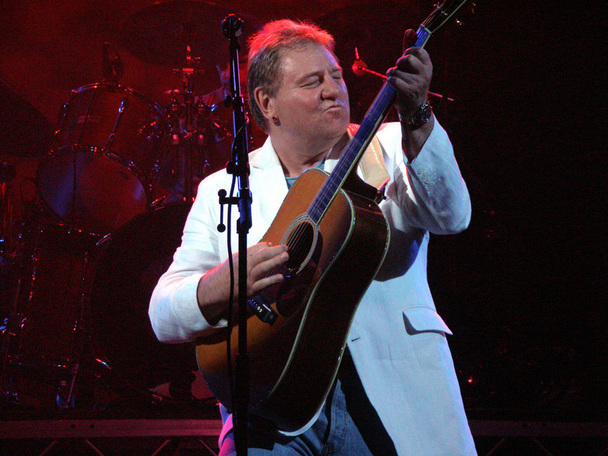



Early career and King Crimson
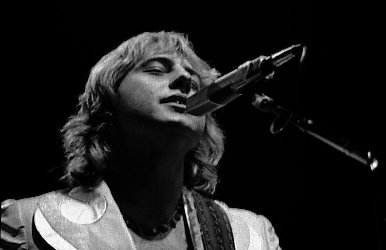
Lake was a founding member of King Crimson and sang and played on their influential debut album, a record frequently cited as a landmark in late‑1960s progressive and art rock. His clear, melodic baritone and ability to write compact songs provided a human center to the band’s more experimental and improvisational tendencies, helping broaden the appeal of the new musical direction.
Emerson, Lake & Palmer and notable works
In 1970 Lake left to form Emerson, Lake & Palmer with keyboardist Keith Emerson and drummer Carl Palmer. As the group’s lead singer and a primary songwriter he balanced virtuosic instrumental passages with memorable, accessible tunes. Some of his best‑known pieces include:
- "Lucky Man" — a plaintive, folk‑tinged ballad that became one of ELP’s signature songs, noted for a short synthesizer solo that has often been remarked upon.
- "I Believe in Father Christmas" — a seasonal solo single that has remained widely played since its release.
Style, roles and contributions
Lake was admired for his warm baritone, economical but evocative songwriting, and his work on both guitar and bass. In ensembles dominated by instrumental display he often supplied the melodic core and lyricism that listeners remembered most. His approach helped make complex musical ideas more accessible without sacrificing artistic ambition.
Later life and legacy
Beyond the 1970s he recorded solo albums, took part in reunions and guest appearances, and worked with other artists and producers. He continued to perform and to be cited as an influence by singers in rock and progressive music. Greg Lake died in London on 7 December 2016 from pancreatic cancer, aged 69. His songs and distinctive voice remain central to accounts of the development of progressive rock and its crossover into mainstream audiences.
Related articles
Author
AlegsaOnline.com Greg Lake — English singer, songwriter and progressive rock musician Leandro Alegsa
URL: https://en.alegsaonline.com/art/120058
Sources
- rollingstone.com : "ELP frontman, Greg Lake talks on King Crimson reunion, Kanye West sample"
- cbsnews.com : "Greg Lake, King Crimson and ELP founder, is dead at 69"
- wikidata.orgQ343075.html : wikidata.orgq343075.html
- authority.bibsys.no : 7019003
- catalogo.bne.es : XX992590
- catalogue.bnf.fr : cb140465053
- data.bnf.fr : (data)
- d-nb.info : 134438450
- isni.org : 0000 0000 7841 2014
- id.loc.gov : nr90009706
- kopkatalogs.lv : 000150447
- musicbrainz.org : 6e2fdea5-8960-46ec-8a05-41b7eec3b2a9
- aleph.nkp.cz : ola2002151902
- snaccooperative.org : w6ks7p4r
- idref.fr : 086927698