
Gideon Welles (1802–1878) — U.S. Secretary of the Navy during the Civil War
Gideon Welles led the U.S. Navy Department from 1861–1869, directing the Civil War blockade, modernizing naval forces, and leaving detailed diaries that illuminate the Lincoln and Johnson administrations.
Gideon Welles (July 1, 1802 – February 11, 1878) served as United States Secretary of the Navy from March 7, 1861, to March 4, 1869. Appointed at the outbreak of the American Civil War, he oversaw a rapid expansion and modernization of the naval service and implemented policies that shaped naval operations for decades. He was born in Glastonbury, Connecticut, and his tenure spanned the administrations of Abraham Lincoln and Andrew Johnson.
Image gallery
9 Images


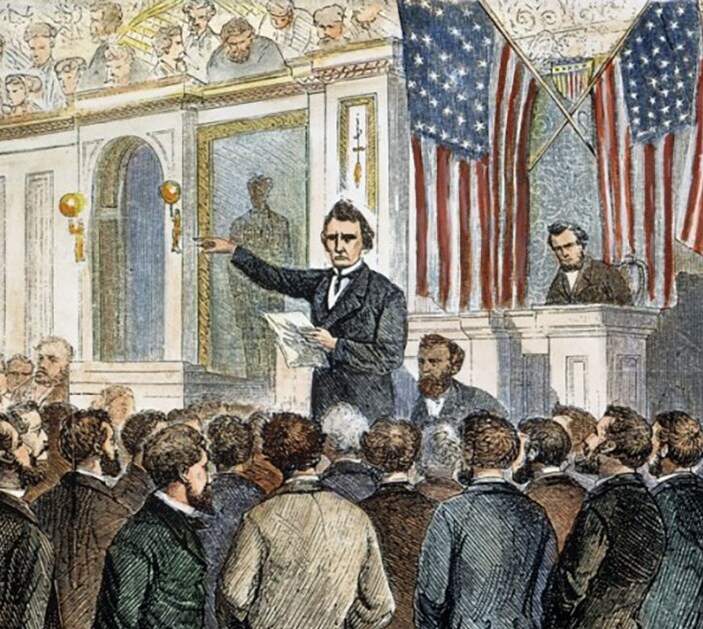

Role and responsibilities
As head of the Navy Department, Welles was responsible for procurement, ship construction and repair, personnel, blockading operations, and logistics. His office coordinated the transformation of a peacetime service into a wartime fleet focused on blockading Confederate ports, protecting commerce, and supporting amphibious operations. The post he filled is commonly titled Secretary of the Navy.
Civil War leadership and reforms
Welles played a central part in implementing the Union blockade that restricted Confederate trade. Under his leadership the Navy moved toward steam propulsion, armor plating, and new ordnance; he approved construction and acquisition programs that produced a larger, more modern fleet. He also oversaw improvements in supply, medical care, and ordnance administration to meet wartime demands.
Administration and challenges
Directing a rapidly expanding department brought political and logistical challenges: disputes over contracts, ship designs, and officer assignments were frequent. Welles worked with naval officers, private shipyards, and other federal departments to meet urgent needs while balancing budgetary and political pressures during wartime.
Writings and legacy
Welles kept extensive diaries and correspondence that are valued by historians for their detailed accounts of naval affairs and of the Lincoln and Johnson administrations. His stewardship helped establish practices in American naval administration and accelerated the transition from sail to steam and wood to iron in U.S. warships.
Notable facts
- Tenure covered both wartime exigencies and the early years of Reconstruction.
- Advocated modernization and a strong administrative framework for the Navy.
- Diaries and papers remain important primary sources for Civil War and naval historians.
Related articles
Author
AlegsaOnline.com Gideon Welles (1802–1878) — U.S. Secretary of the Navy during the Civil War Leandro Alegsa
URL: https://en.alegsaonline.com/art/119787
Sources
- history.navy.mil : "Gideon Welles"