
Black Panther (2018 film)
2018 Marvel Studios film directed by Ryan Coogler. A culturally influential superhero movie exploring Wakanda, identity, leadership and Afrofuturism, starring Chadwick Boseman and Michael B. Jordan.
Overview
Black Panther is a 2018 superhero film produced by Marvel Studios and directed by Ryan Coogler. Set in the shared Marvel Cinematic Universe, it follows T'Challa, the newly crowned king of the fictional African nation of Wakanda, who must balance the responsibilities of rulership with his role as the protector known as the Black Panther. The film blends action and spectacle with social and political themes, and it foregrounds African-inspired design and Afrofuturist aesthetics.
Image gallery
10 Images



Plot and principal characters
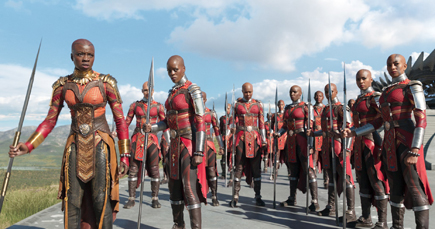
The story follows T'Challa (played by Chadwick Boseman) after he returns to Wakanda to assume the throne following his father's death. Major characters include the antagonist Erik Killmonger (played by Michael B. Jordan), members of the royal family, leaders of Wakanda's tribes, and the elite guard the Dora Milaje. Wakanda's secret wealth and advanced technology, powered by the rare metal vibranium, are central to the conflict. The antagonist's motivations raise questions about diaspora, justice and the legacy of colonialism; these ideas propel much of the film's ethical tension.
Production, style and music
The film is noted for its production design, costumes and soundtrack, which draw on diverse African traditions and contemporary musical styles. Costume designer Ruth E. Carter and composer Ludwig Göransson were widely praised for their contributions. Director Coogler's approach emphasized character-driven drama within a blockbuster framework, and the film's visual design helped popularize Afrofuturist imagery in mainstream cinema.
Themes and cultural significance
Black Panther engages themes of leadership, national identity, responsibility to the global community, and the relationship between tradition and modernity. Its predominantly Black cast and depiction of a technologically advanced African nation sparked broad conversations about representation in large‑budget genre films and about how popular entertainment can address historical and contemporary social issues.
Reception, awards and legacy
The film achieved major commercial success and was recognized by critics for its performances, direction and technical achievements. It earned Academy Award nominations and won awards in categories including costume design, production design and original score. It was also notable as one of the first widely visible superhero films to receive major recognition at the Academy Awards, helping to broaden discussions about the artistic potential of comic‑book adaptations.
Sequels and further reading
Black Panther expanded the role of Wakanda within the MCU and led to a follow-up film, which continued to explore the nation's political and cultural landscape. For official information and additional context see the film's official pages and profiles: official site, the MCU overview at Marvel Cinematic Universe, actor profiles such as Chadwick Boseman and Michael B. Jordan, and character analyses like Erik Killmonger.
- Black Panther broadened mainstream exposure to Afrofuturist aesthetics.
- The film sparked conversations about representation, historical memory and global responsibility.
- Its creative team received wide recognition for design, music and costumes.
Related articles
Author
AlegsaOnline.com Black Panther (2018 film) Leandro Alegsa
URL: https://en.alegsaonline.com/art/11952