
Dirk B. J. Schouten — Dutch economist and macroeconomic modeller
Profile of Dirk Bernard Joseph (Dick) Schouten (1923–2018), Dutch economist, professor at Tilburg University, noted for contributions to macroeconomic modelling, teaching, and economic history.
Dirk Bernard Joseph (Dick) Schouten (25 January 1923 – 3 February 2018) was a Dutch economist best known for his work in macroeconomic modelling and economic history. Over a long academic career he combined theoretical interests with empirical approaches to national economic questions, and he played a formative role in teaching and institutional development at a major Dutch university. For more on his background see Dirk B. J. Schouten.
Image gallery
2 Images
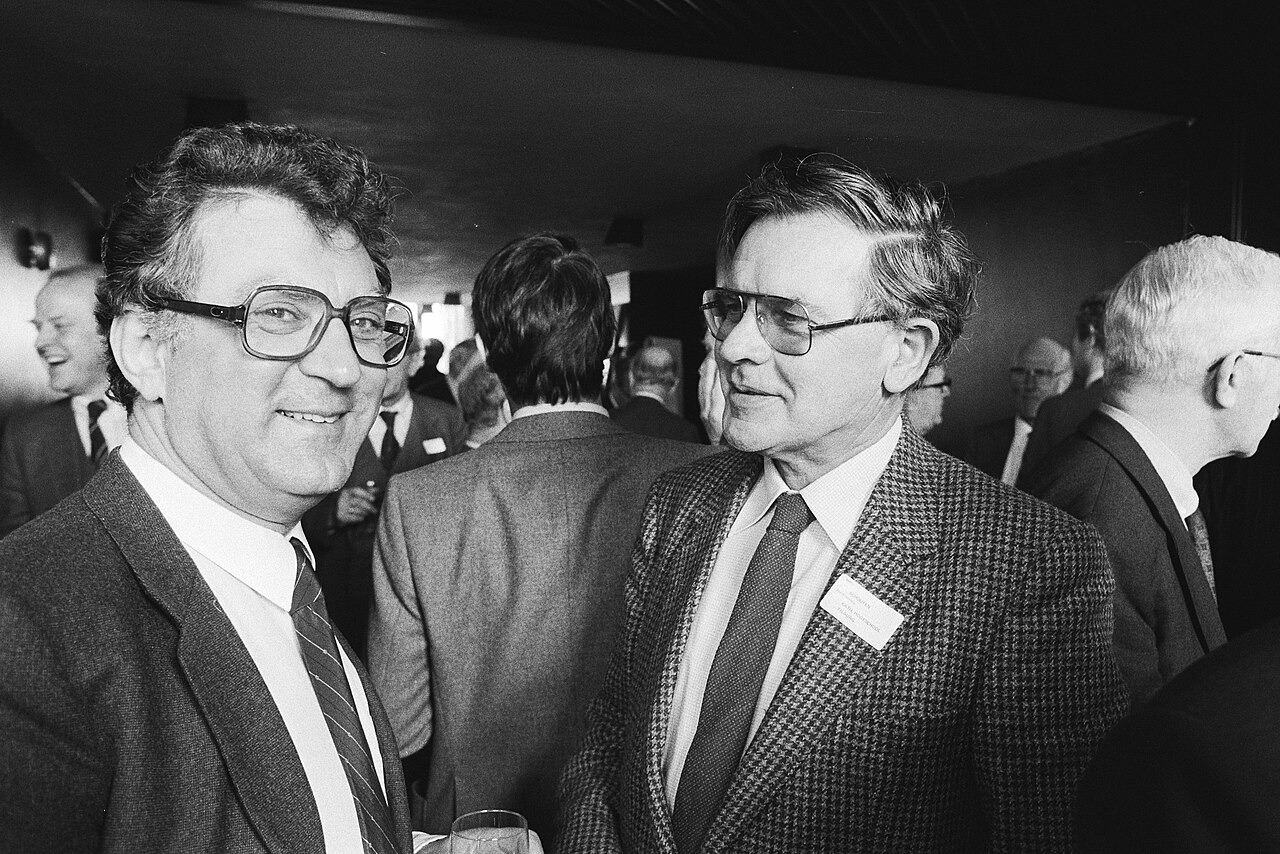
Academic career and posts
Schouten served as Professor of General Economics and Economic History at Tilburg University, where he taught for many years and supervised students in both economic theory and the history of economic thought. His appointment reflected a dual interest in broad economic frameworks and the historical forces that shaped national income accounting and policy debates. Colleagues and students remember him for a rigorous approach to modelling and a clear concern with practical relevance.
Research focus and contributions
Schouten's research emphasized the construction and use of macroeconomic models to analyze aggregate behavior and policy effects. His work related to:
- macroeconomic modelling and the specification of relationships among key aggregates;
- applications of econometric techniques to national accounts and forecasting;
- historical studies that placed modern macroeconomics in a longer institutional and intellectual context.
Rather than being confined to abstract theory, his projects often aimed to inform policy discussions and improve empirical understanding of business cycles, inflation, and employment dynamics.
Teaching, influence and recognition
As a professor, Schouten influenced several generations of students and helped strengthen Tilburg's reputation in applied economics. He balanced classroom teaching with research supervision and public engagement. In 1975 he was elected a member of the Royal Netherlands Academy of Arts and Sciences, a recognition of his scholarly contributions and standing among Dutch academics.
Later life and legacy
Schouten died on 3 February 2018 in The Hague at the age of 95. His legacy lies in a pragmatic fusion of modelling rigor and sensitivity to historical context, and in the many economists he trained who continued to work on macroeconomic measurement and policy analysis. Today his career is cited as an example of combining empirical work, teaching, and institutional service in twentieth-century Dutch economics.
Selected themes associated with his work:
- Bridging theory and empirical measurement in macroeconomics.
- Emphasis on national accounts and econometric application.
- Commitment to historical perspective in economic analysis.
Related articles
Author
AlegsaOnline.com Dirk B. J. Schouten — Dutch economist and macroeconomic modeller Leandro Alegsa
URL: https://en.alegsaonline.com/art/117718
Sources
- books.google.com : Schouten, D.B.J.
- tilburguniversity.edu : Arnold Boot
- knaw.nl : "Dick Schouten"
- drimble.nl : "In Memoriam Dirk Schouten (1923 – 2018)"
- bd.nl : "Cookies op bd.nl - bd.nl"