
Bill Foulkes: Manchester United Defender and Long-serving Club Stalwart
Biography of Bill Foulkes (1932–2013), central defender for Manchester United, Munich air disaster survivor, England international and later coach — his career, role in rebuilding United, and legacy.
William "Bill" Foulkes (5 January 1932 – 25 November 2013) was an English professional footballer best known for his long career at Manchester United. A steady, uncompromising centre-half, Foulkes became a mainstay of the club’s defence through the 1950s and 1960s and is remembered as one of the generation that rebuilt United after the Munich air disaster.
Image gallery
3 Images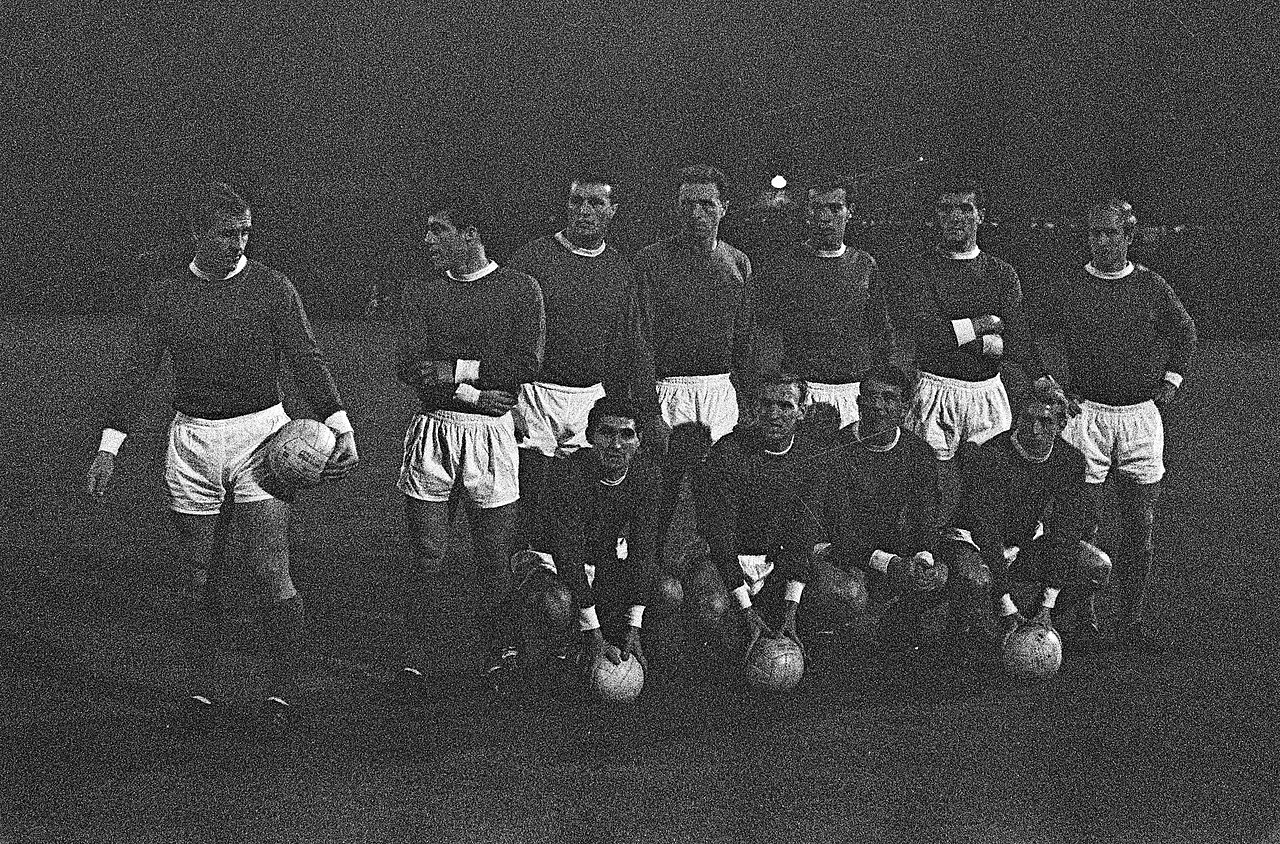


Playing career and characteristics
Foulkes spent the bulk of his playing days with Manchester United, appearing in the first team for two decades. He was noted for positional sense, aerial strength and a calm temperament under pressure. Though primarily a central defender, he was adaptable and contributed to United’s transition from the youthful Busby Babes to the experienced side that later achieved major honours.
Munich air disaster and rebuilding
Foulkes survived the 1958 Munich air disaster that killed several teammates; that event profoundly affected both him and the club. In the difficult aftermath he was a key figure in the dressing room and on the pitch as Manchester United rebuilt under manager Matt Busby, helping to restore the club to domestic and European competitiveness.
International and later roles
He was capped by England, representing his country at senior level. After retiring from playing he moved into coaching and had spells in management and mentoring roles, sharing experience gained during a long professional career. He also remained connected to the football community and to Manchester United supporters.
Legacy and notable facts
- Known for loyalty and longevity at club level, with almost seven decades between his birth and his death spanning the modern era of the game.
- Part of United’s post-Munich revival that culminated in later domestic and European success.
- Recognised in club histories and fan memory; his career is documented in many career records and retrospectives.
Bill Foulkes remains an emblematic figure for Manchester United supporters: a dependable defender, a survivor who helped rebuild a club in mourning, and a veteran who carried experience into coaching and mentoring. His life in football illustrates both personal resilience and the wider history of English club football in the mid-20th century.
Tags
Related articles
Author
AlegsaOnline.com Bill Foulkes: Manchester United Defender and Long-serving Club Stalwart Leandro Alegsa
URL: https://en.alegsaonline.com/art/11457
Sources
- national-football-teams.com : "Bill Foulkes"