
Anna Lindh (1957–2003)
Swedish Social Democratic politician and foreign minister known for her advocacy of human rights and European cooperation; assassinated in 2003 during a national campaign.
Overview
Ylva Anna Maria Lindh (19 June 1957 – 11 September 2003) was a prominent Swedish Social Democratic political figure and public official. She is best known for serving as Sweden's Minister for Foreign Affairs from 1998 until her death in 2003. Lindh was widely regarded as an energetic advocate for human rights, international cooperation and deeper engagement with Europe.
Image gallery
4 Images


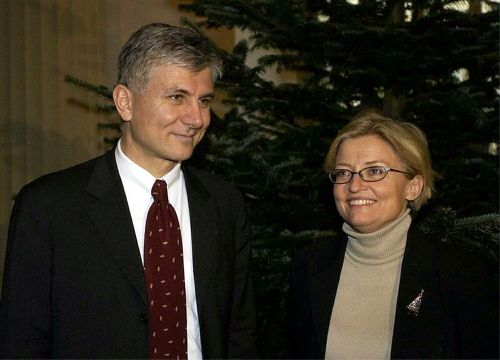
Career and positions
Lindh rose through the ranks of the Social Democratic movement and held both elected and party posts. Key positions in her career included:
- Chair of the Social Democratic Youth League (SSU), 1984–1990.
- Member of the Riksdag (Swedish parliament) 1982–1985 and again 1998–2003.
- Minister for Foreign Affairs, 1998–2003.
Her work combined domestic party leadership with a visible role on the international stage, where she represented Sweden in diplomatic forums and on issues such as conflict mediation and development cooperation.
Political priorities and style
Lindh championed a pragmatic, values-driven approach to foreign policy. She emphasized the protection of human rights, humanitarian assistance and active participation in European institutions. Colleagues and commentators often noted her direct speaking style, commitment to consensus and ability to connect with both political allies and the public.
Assassination and aftermath
On 10 September 2003, while campaigning ahead of a national referendum, Lindh was attacked in a public place in Stockholm and suffered severe wounds; she died the following day, 11 September 2003. The killing shocked Sweden and drew international attention. An assailant was later arrested, tried and convicted. The event had a profound effect on national politics and public debate about security for public figures.
Legacy
Anna Lindh is remembered for raising the international profile of Swedish diplomacy and for her advocacy of human rights and European cooperation. Her death prompted numerous tributes, official memorials and renewed discussion about political violence and public safety. Her life and work continue to be cited in conversations about values-based foreign policy in Sweden and beyond.
See also: politician profiles and historical accounts for further context on Lindh's role in Swedish and European politics.
Related articles
Author
AlegsaOnline.com Anna Lindh (1957–2003) Leandro Alegsa
URL: https://en.alegsaonline.com/art/114270