
Swedish Social Democratic Party
Comprehensive overview of the Swedish Social Democratic Party: origins, ideology, organisation, history, notable leaders and its role in shaping Sweden's welfare state.
The Swedish Social Democratic Party is one of Sweden's oldest and most influential political organisations. Founded on 23 April 1889, it is commonly known by its Swedish name Sveriges socialdemokratiska arbetareparti. Over more than a century the party has been central to national politics and the development of modern Sweden, often associated with broad support among trade unions and a long-standing commitment to social democratic policies.
Image gallery
5 Images


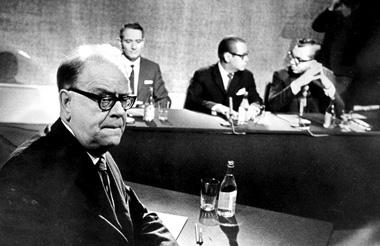
Ideology and organisation
At its core the party adheres to social democracy: a political tradition that combines representative democracy with policies aimed at reducing inequality, protecting workers, and maintaining an extensive welfare system. The party has close organisational ties with Sweden's labour movement and historically cooperated with key unions to shape labour law, public services and social insurance. Scholars and commentators often describe the Social Democrats as the principal architects of the Swedish welfare state and of many universal public provisions that remain central to Swedish public life today.
History and development
From its emergence in the late 19th century the party grew from a workers' movement into a broad-based political force. It led or participated in numerous governments during the 20th century and became known for pragmatic reformism: pursuing incremental change through parliamentary politics rather than revolutionary action. Periods of long Social Democratic-led governance were marked by expansion of public education, health care, housing policy and pensions, alongside industrial and economic reforms that aimed to combine economic growth with social protection.
Notable leaders and events
- Per Albin Hansson and Tage Erlander are often associated with mid-20th-century consolidation of the welfare state.
- Olof Palme, a prominent and internationally known Social Democratic prime minister, was a central figure in Swedish and international politics; his career and assassination remain defining moments in modern Swedish history — see Olof Palme and the circumstances surrounding his death in February 1986.
- In more recent decades the party has been led by figures such as Stefan Löfven and other senior politicians who navigated the party through changing political landscapes and electoral competition.
Electoral performance and recent trends
The Social Democrats dominated Swedish politics for much of the 20th century but have faced tougher competition from conservative and centre-right parties in recent decades. Notably, they lost national elections to the Moderate Party in 2006 and 2010, reflecting shifts in voter priorities and the rise of new political movements. They returned to government following subsequent elections and have continued to compete over issues such as unemployment, immigration, taxation and public services. The party's capacity to form or join coalitions has been a key factor in its ability to influence policy even when it has not won an outright majority.
Characteristics and contemporary relevance
The Social Democratic Party remains a leading voice for policies that support collective provision and economic security. Its organisational strengths include a nationwide network of local branches, affiliated youth and women's organisations, and historical partnerships with labour unions. Debates within the party today tend to focus on balancing fiscal sustainability with commitments to welfare provision, responding to demographic and labour-market changes, and defining positions on immigration and integration. For readers seeking further primary documents or official positions, party publications and platforms provide detailed policy proposals and historical statements.
For introductory and source material consult official party pages and academic overviews that trace the party's evolution and current platform, including material in Swedish and English about Sweden and the broader tradition of social democracy. For timelines of leadership and election results see party histories and election archives; biographical profiles often note when leaders took office or led the party — for example, records of leadership changes in October in various years.
Questions and answers
Q: What is the Swedish Social Democratic Party?
A: The Swedish Social Democratic Party is an established political party of social democracy in Sweden.
Q: When was the Swedish Social Democratic Party established?
A: The Swedish Social Democratic Party was established on April 23, 1889.
Q: Which party has been in the lead with a Prime Minister for the longest and most amount of time in Sweden?
A: The Swedish Social Democratic Party has been in the lead with a Prime Minister for the longest and most amount of time in Sweden.
Q: Who is the current leader of the Swedish Social Democratic Party?
A: The current leader for the Swedish Social Democratic Party is Stefan Löfven.
Q: Has the Swedish Social Democratic Party ever lost an election?
A: Yes, the Swedish Social Democratic Party lost to the Moderate Party in the 2006 and 2010 elections.
Q: When did Olof Palme lead the Swedish Social Democratic Party?
A: Olof Palme, one of Sweden's most famous politicians, was the party leader from October many years before he was murdered in February 1986.
Q: Which party won the 2014 election in Sweden?
A: The Swedish Social Democratic Party won the 2014 election in Sweden with 31% of the votes.
Related articles
Author
AlegsaOnline.com Swedish Social Democratic Party Leandro Alegsa
URL: https://en.alegsaonline.com/art/95478