
Amar Singh Thapa (Badakaji): Nepali commander and national hero
Senior commander in Nepal's westward campaigns, known as Badakaji Amar Singh Thapa or Amar Singh Thapa 'The Elder'. Celebrated military leader and one of Nepal's national heroes.
Overview
Amar Singh Thapa, commonly known by the honorifics Badakaji or Budha Kazi and often called Amar Singh Thapa "The Elder", was a leading military commander during the period of Nepalese expansion and consolidation in the late 18th and early 19th centuries. He is widely remembered in Nepali tradition as a courageous and capable leader and has been described in popular memory as a "Living Lion" of Nepal. In later official commemorations he is listed among Nepal's national heroes.
Image gallery
8 Images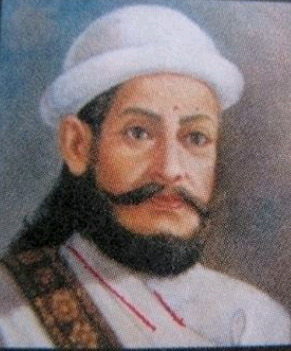


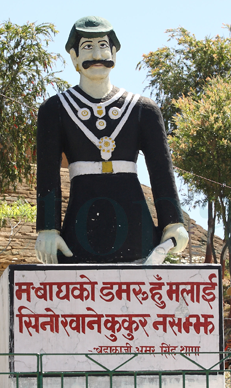
Background and social position
Belonging to the Thapa family, one of several prominent military and administrative clans of the time, Amar Singh rose through the ranks to hold senior responsibilities. Titles such as Badakaji and Budha Kazi indicate both military rank and civil duties in the state administration of that era. Contemporary chronicles and later histories present him as part of a martial elite that combined local influence with central service.
Campaigns, tactics and fortifications
Amar Singh is principally associated with campaigns in the western provinces and frontier zones. Historical accounts credit him with organising garrisons, supervising the construction and repair of forts, maintaining supply lines in difficult terrain and directing troops in mountain warfare. His methods reflected a blend of set-piece defence and agile, terrain-aware operations suited to the hills—practices that became associated with the Gurkha military reputation.
Administrative role and local impact
Beyond battlefield command, Amar Singh performed administrative duties in territories under his control. He is credited in regional traditions with establishing local order, settling disputes and integrating newly acquired areas into state structures. Place names, monuments and oral traditions in parts of western Nepal preserve memories of his presence and actions.
Reputation, legacy and scholarship
Amar Singh Thapa's reputation rests on a mix of contemporary records, regional chronicles and later commemorative writing. Historians caution against conflating him with other members of the Thapa family who shared similar names and ranks; references to Amar Singh should be checked against context to distinguish "the Elder" from later figures. For local and popular accounts see his Nepali name and titles: बडाकाजी अमर सिंह थापा, and for related military tradition consult sources on the Gurkhas.
Further reading and research notes
- Much of the widely known narrative combines official records, regional histories and oral tradition; researchers should consult multiple source types and modern scholarship for critical interpretation.
- When studying Amar Singh Thapa consult Nepali-language material alongside English-language studies that place his career in the broader context of state formation and frontier defence.
Questions and answers
Q: Who is Amar Singh Thapa?
A: Amar Singh Thapa is a senior commander of Nepal Army and a national hero of Nepal, who led battles of conquest and defense for Gurkhas.
Q: What is Amar Singh Thapa also known as?
A: Amar Singh Thapa is also known as Badakaji Amar Singh Thapa, Budha Kazi Amar Singh Thapa, and Amar Singh Thapa The Elder.
Q: What was Amar Singh Thapa's role in the conquest of Western Provinces?
A: Amar Singh Thapa was a senior commander of Nepal Army in the conquest of Western Provinces.
Q: What is Amar Singh Thapa often hailed as?
A: Amar Singh Thapa is often hailed as Living Lion of Nepal.
Q: Was Amar Singh Thapa posthumously awarded with a national hero title in Nepal?
A: Yes, Amar Singh Thapa was posthumously awarded with National heroes of Nepal.
Q: Did Amar Singh Thapa lead battles of conquest and defense for Gurkhas in person?
A: Yes, Amar Singh Thapa often led great battles of conquest and defense for Gurkhas in person.
Q: What is the significance of Amar Singh Thapa in Nepalese history?
A: Amar Singh Thapa is a significant figure in Nepalese history as a senior commander of Nepal Army and a national hero who led battles of conquest and defense for Gurkhas.
Related articles
Author
AlegsaOnline.com Amar Singh Thapa (Badakaji): Nepali commander and national hero Leandro Alegsa
URL: https://en.alegsaonline.com/art/113950
Sources
- nepalarmy.mil.np : "Archived copy"
- bilder-aus-nepal.de : "Cover with the seal of Amar Singh Thapa"
- imnepal.com : "National Heroes / Personalities / Luminaries of Nepal"
- books.google.com : An account of the war in Nipal; Contained in a Letter from an Officer on the Staff of the Bengal Army. Asiatic journal and monthly miscellany, Vol 1. May, 1816. pp. 425–429.
- books.google.com.np : Military history of Nepal
- books.google.com : Journal of a tour through part of the snowy range of the Himālā mountains, and to the sources of the rivers Jumna and Ganges
- books.google.com : Thapa Politics in Nepal: With Special Reference to Bhim Sen Thapa, 1806–1839
- books.google.com : History of the political and military transactions in India during the administration of the Marquess of Hastings, 1813–1823, Vol 1
- books.google.com.np : Modern Nepal:Expansion: climax and fall
- books.google.com.np : Kings, soldiers, and priests: Nepalese politics and the rise of Jang Bahadur Rana, 1830-1857