
60s BC (60–51 BC)
Decade from 60 to 51 BC characterized by the First Triumvirate’s dominance, Caesar’s Gallic campaigns and British expeditions, Crassus’s defeat at Carrhae, and Cleopatra VII’s accession in Egypt.
Overview
The 60s BC cover the years 60 through 51 BC, a pivotal decade in the late Roman Republic. Political alliances and rivalries among Rome’s leading men were consolidated while military campaigns expanded Roman control in western Europe and shifted influence across the eastern Mediterranean. Events of this period set important precedents for the civil conflicts that followed in the final decades of the Republic.
Image gallery
1 Image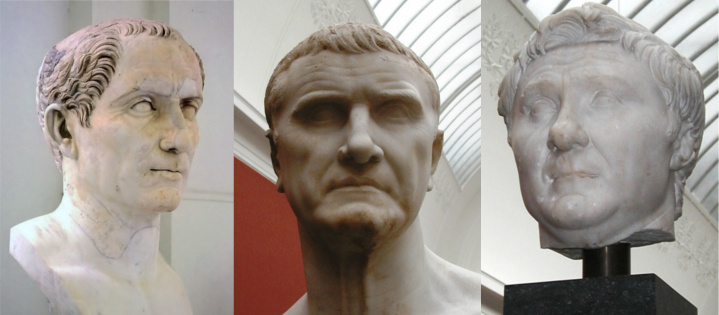
Political alignments and government
Roman politics in this decade were dominated by an informal coalition known as the First Triumvirate: Julius Caesar, Pompey the Great and Marcus Licinius Crassus. The alliance combined military commands, wealth and popular support to control elections and legislation. Caesar’s consulship in 59 BC and the subsequent agreement reaffirmed at Lucca in 56 BC secured provincial commands and political protection for the partners. The arrangement weakened traditional senatorial control and increased reliance on personal armies and patronage.
Military campaigns and conflicts
From 58 BC onward Caesar conducted a series of campaigns in Gaul that progressively brought much of the region under Roman domination and enhanced his reputation as a military commander. He made two crossing expeditions to Britain in 55 and 54 BC, reconnaissance and diplomatic in purpose rather than full conquest. In the east, Crassus’s expedition against the Parthian Empire ended in disaster at the Battle of Carrhae in 53 BC, where Roman forces were decisively defeated and Crassus killed. The loss removed a key power broker and intensified rivalry between Caesar and Pompey.
Key events (select)
- 60 BC: Formation of the First Triumvirate (conventionally dated).
- 59 BC: Julius Caesar’s consulship; controversial reforms and land laws.
- 58–50 BC: Caesar’s campaigns in Gaul and coastal expeditions to Britain (55–54 BC).
- 56 BC: Meeting at Lucca to coordinate political and military plans.
- 53 BC: Battle of Carrhae; death of Marcus Crassus.
- 52 BC: Major Gallic coalition and the siege of Alesia; Vercingetorix’s revolt and defeat (central moment of the Gallic resistance).
- 51 BC: Death of Ptolemy XII; Cleopatra VII becomes a principal figure in Egypt’s dynastic politics.
Other regions and broader context
Beyond Rome and the Mediterranean, established states such as the Parthian Empire remained important powers, and long-distance trade across Eurasia continued to link Mediterranean markets with sources of luxury goods farther east. Hellenistic client kingdoms in the eastern Mediterranean experienced ongoing political change under the shadow of Roman influence. In Egypt the accession of Cleopatra VII marked the beginning of a reign that would later have substantial implications for Roman eastern policy.
Significance
The decade is significant for how military success and political alliances altered Rome’s internal balance. Caesar’s growing power and territorial gains, together with Crassus’s removal and Pompey’s prominent command, increased competition and mistrust among Rome’s elites. These dynamics contributed directly to the breakdown of cooperative governance and to the civil wars that followed in the 40s BC, ultimately transforming the Roman state.
Politics, society and culture
Within Roman society, the 60s BC saw intensified use of patronage, public spectacle and legislation to secure political loyalties. Prominent senators and orators remained active in public life, and Roman literary and rhetorical culture continued to develop alongside political events. Administrative and economic pressures from expanding provinces placed new demands on Roman institutions.
Related articles
Author
AlegsaOnline.com 60s BC (60–51 BC) Leandro Alegsa
URL: https://en.alegsaonline.com/art/113000