
1938 FIFA World Cup
International football tournament held in France in 1938; Italy won its second consecutive title, defeating Hungary in the final. The event was the last World Cup before World War II interrupted the competition.
Overview
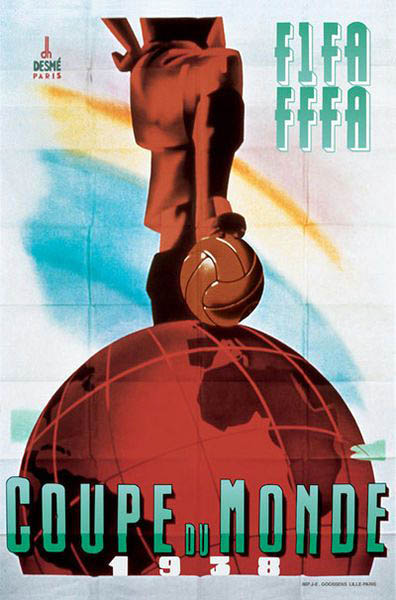
The 1938 FIFA World Cup was the third edition of the global football tournament and took place in France in June 1938. Sixteen national teams competed in a straight knockout format. The title was retained by Italy, who defeated Hungary in the final to become the first nation to win back-to-back World Cups. The competition showcased the international reach of football on the eve of a major geopolitical upheaval in Europe.
Image gallery
10 Images


Format and participants
The tournament used a single-elimination bracket: teams that drew were sometimes required to play a replay to determine a winner. Sixteen entrants included a mix of European sides and teams from the Americas. Political developments in the late 1930s affected entries and squad composition; some qualified teams withdrew or were reshaped by events of the time.
Notable matches and the final
The final saw Italy prevail over Hungary in a match that produced several goals and confirmed Italy's dominance of the era. Earlier rounds produced upsets and dramatic replays typical of knockout competition. Individual players and national teams earned lasting recognition for their performances during the tournament.
Key points:
- Host nation: France.
- Champion: Italy (second consecutive title).
- Runner-up: Hungary.
Because the tournament occurred shortly before the outbreak of World War II, it was the last World Cup held until 1950. The 1938 edition is often remembered for its competitive matches and for the way international sport intersected with the politics of the period.
The event left several notable legacies: the confirmation of Italy as a pre-war football power, an example of early intercontinental travel for teams, and the interruption of global competition by war. For more detailed records and match statistics consult specialized football archives and histories.
Related articles
Author
AlegsaOnline.com 1938 FIFA World Cup Leandro Alegsa
URL: https://en.alegsaonline.com/art/111978
Sources
- web.archive.org : Archive copy