
1848 — The Year of Revolutions and Global Turning Points
1848 saw a wave of liberal and national uprisings across Europe, the publication of the Communist Manifesto, the start of the California Gold Rush, and major diplomatic changes after the Mexican–American War.
Overview
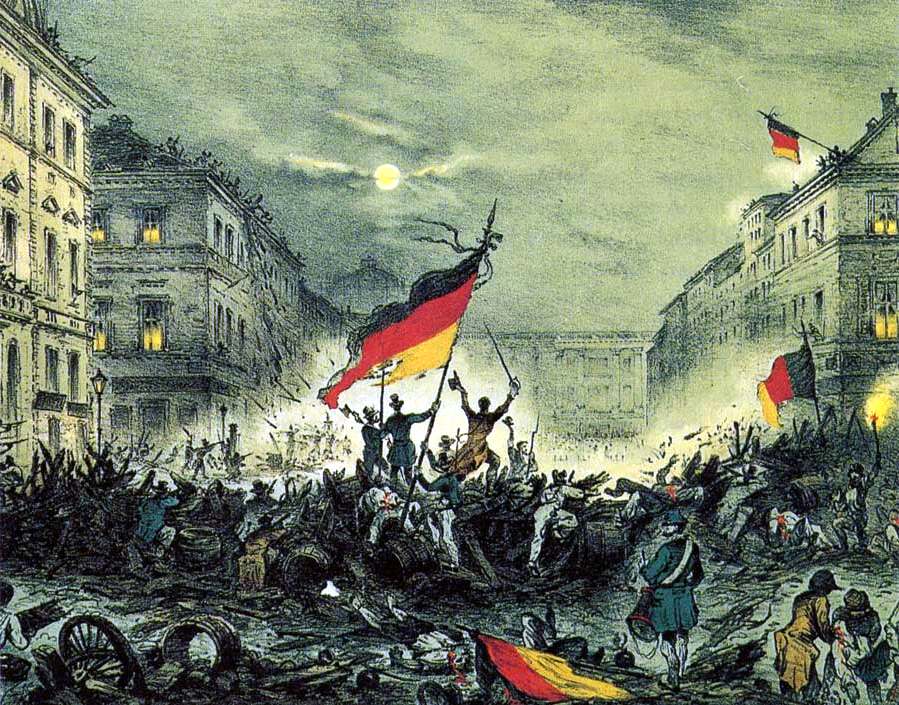
1848 is often called the "Year of Revolutions" because of a broad continental upheaval in Europe coupled with important political, social, and economic developments elsewhere. During this year a network of liberal, nationalist, and social movements challenged established monarchies and traditional social orders. Although many uprisings were suppressed within a few years, the events of 1848 accelerated longer-term changes in politics, economics, and ideology.
Image gallery
10 Images


Causes and characteristics
The unrest of 1848 reflected a mix of acute economic distress, social change, and spreading political ideas. Poor harvests and industrial dislocation in preceding years increased unemployment and hardship. Growing literacy, expanded political awareness, and the spread of nationalist and liberal thought created popular demands for constitutions, representative government, civil rights, and the end of feudal privileges. Many movements combined calls for social reform with national self-determination.
Major events and examples
- Europe: A wave of revolts affected France, the German states, the Austrian Empire (including Hungary), northern Italy, and other areas. The French February Revolution overthrew King Louis-Philippe and led to the Second Republic; similar uprisings sought constitutions and national unity elsewhere.
- Ideology: In February 1848 Karl Marx and Friedrich Engels published the Communist Manifesto, which became a foundational text for later socialist movements.
- United States and Mexico: The Treaty of Guadalupe Hidalgo was signed in February 1848, formally ending the Mexican–American War and transferring large territories to the United States.
- California Gold Rush: The discovery of gold at Sutter's Mill in 1848 set off a massive migration to California and reshaped the economy and settlement of the American West.
- Women's rights: The Seneca Falls Convention in July 1848 in New York issued the Declaration of Sentiments, an early and influential statement in the U.S. suffrage movement.
Immediate outcomes and longer-term significance
Most of the 1848 revolts were suppressed or compromised within a few years, and conservative forces regained control in many places. Yet the year left durable legacies: it weakened some old regimes, pressured governments to introduce reforms, popularized nationalist agendas that later enabled Italian and German unification, and strengthened labor and socialist organizing. In France, Louis-Napoleon Bonaparte was elected president in December 1848 and would later transform the republic into an empire.
Notable distinctions
1848 is distinctive for the breadth of simultaneous change: political revolution, social theory, diplomatic realignment, mass migration to new frontiers, and early organized demands for women's rights. Its combinations of immediate failure and long-term influence make it a pivotal reference point in 19th-century history.
Questions and answers
I'm sorry, there is no text provided in this prompt. Please provide a passage or text so I can create questions and answers.
Related articles
Author
AlegsaOnline.com 1848 — The Year of Revolutions and Global Turning Points Leandro Alegsa
URL: https://en.alegsaonline.com/art/111806