
1460 — the year and the integer
Overview of 1460 as an integer and as the year AD 1460: mathematical properties, calendar facts, and key historical context in late medieval Europe, including events in the Wars of the Roses.
Overview
1460 can refer both to the natural number 1460 and to the calendar year AD 1460 (in the Julian calendar). As a year it falls in the late Middle Ages, a period of political conflict and cultural change that is often described as the transition toward the Renaissance and the Age of Discovery. As a number it has simple arithmetic and divisibility properties used in elementary number theory and practical counting contexts.
Image gallery
2 Images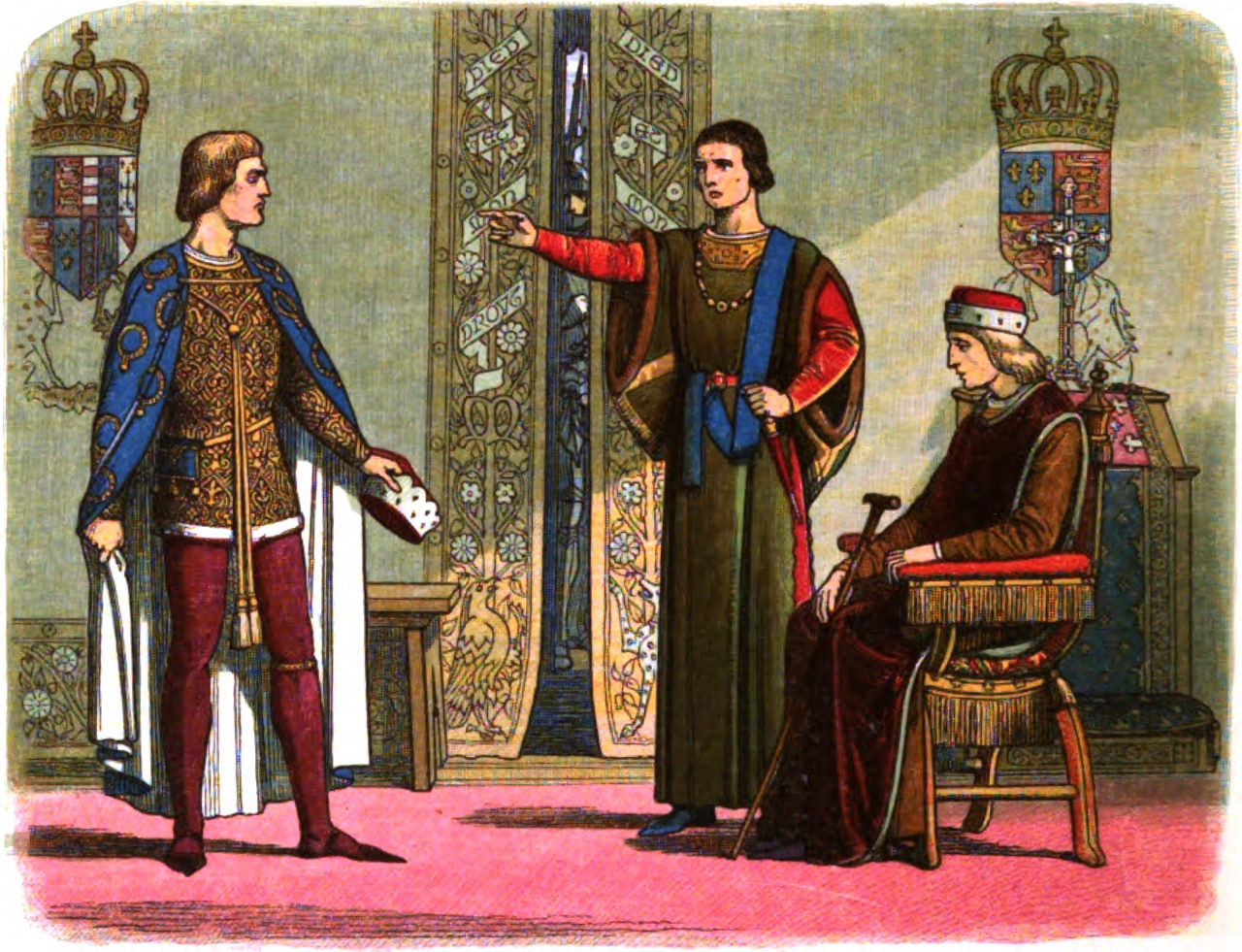

Mathematical characteristics
As an integer, 1460 is even and composite. Its prime factorization is 2^2 × 5 × 73. It has 12 positive divisors: 1, 2, 4, 5, 10, 20, 73, 146, 292, 365, 730 and 1460. The sum of all divisors is 3,108, which makes the sum of its proper divisors greater than the number itself; thus 1460 is an abundant number. In Roman numerals it is written MCDLX.
1460 in the calendar
Under the Julian calendar used in Europe at that time, the year 1460 was a leap year because it is divisible by four. The year sits amid broader chronological frameworks: it is part of the 15th century and the late medieval era when printing technology, long-distance navigation, and artistic innovation were spreading across Europe.
Historical context and notable events
The year AD 1460 is most often remembered in English history for developments in the Wars of the Roses, a dynastic struggle between branches of the royal House of Plantagenet. In 1460 the English Parliament enacted the Act of Accord, a temporary settlement of succession that favored the Yorkist claim. Later that year the conflict turned bloody: the Yorkist leader Richard, Duke of York, was killed in battle at Wakefield, an event that intensified the civil war.
Wider 15th-century background
Beyond England, the middle of the 15th century was a time of expansion and change across Eurasia and beyond. The Ottoman Empire and various European powers continued to shape regional politics. Meanwhile, the printing press, introduced a few decades earlier, was facilitating the spread of books and ideas; maritime exploration sponsored from Portugal and other courts was gradually opening new sea routes to Africa and, later, across the Atlantic.
Legacy and uses
- As a number, 1460 is encountered in arithmetic examples, divisor problems and occasionally in calendar calculations or cyclical counts.
- As a historical marker, 1460 is cited in accounts of the Wars of the Roses and in narratives about mid-15th-century political and cultural transitions in Europe.
Whether treated as an abstract integer or as a year in human history, 1460 illustrates the ways numeric values and dates serve in mathematics and in organizing our record of past events.
Related articles
Author
AlegsaOnline.com 1460 — the year and the integer Leandro Alegsa
URL: https://en.alegsaonline.com/art/111376