
1447 (Julian calendar year)
1447 was a common year starting on Sunday in the Julian calendar. It saw a major papal succession and occurred during the early Renaissance and the late medieval geopolitical realignments of Europe and the eastern Mediterranean.
Overview
The year 1447 falls in the mid-15th century, a transitional period of late medieval Europe and the early Renaissance in Italy. In contemporary records it is numbered 1447 in the Anno Domini system. In the Julian calendar then in general use across Europe, 1447 was a common year of 365 days that began on a Sunday.
Image gallery
1 Image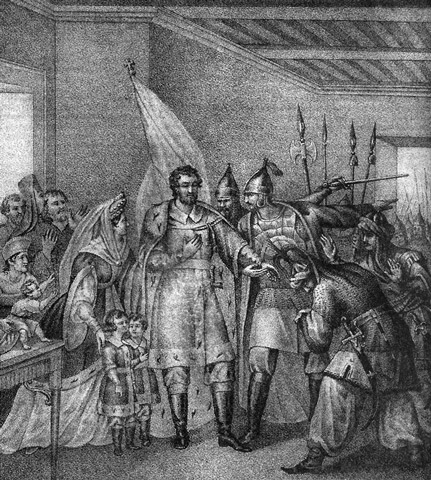
Notable events
Recorded events of 1447 include significant developments in the papacy and in cultural life. A prominent papal transition took place: the death of one pope and the election of his successor, an event with political and cultural consequences throughout Christendom. Meanwhile artistic and intellectual currents associated with Renaissance humanism continued to gather momentum in Italian city-states, and early movable-type printing technology was spreading from its origins in the German lands.
Context and significance
1447 must be understood against larger 15th-century trends: the gradual decline of medieval feudal structures, growing centralization of states, the spread of classical learning, and expanding long-distance trade. The Ottoman Empire was consolidating power in the eastern Mediterranean, and the Hundred Years' War between England and France was in its later stages; these wider conflicts and shifts set the stage for political and cultural transformations in the decades that followed.
Calendar and chronology
The designation "common year" denotes 365 days as opposed to a leap year of 366. Modern historians assign weekdays to medieval dates by projecting the Julian calendar forward; care is needed because the Gregorian calendar reform of 1582 later altered how dates aligned with weekdays. Thus references to a year starting on Sunday reflect the Julian reckoning used at the time.
Legacy and notable facts
Events in 1447 influenced papal patronage of the arts and the administrative patterns of European states. The year is often mentioned in narrative accounts of the mid-15th century because it sits near key turning points: the rise of printing and humanist scholarship, continuing conflicts between regional powers, and the approaching fall of Constantinople in 1453, which would accelerate cultural and geopolitical change.
Further reading
- Surveys of the Italian Renaissance and 15th-century papal history for cultural context.
- Works on late medieval chronology and the transition from the Julian to the Gregorian calendar.
Related articles
Author
AlegsaOnline.com 1447 (Julian calendar year) Leandro Alegsa
URL: https://en.alegsaonline.com/art/111365