
1302 — the number and the year AD (events, context, significance)
Overview of 1302 as an integer (properties) and the year AD 1302, summarizing mathematical features and key historical events such as the Battle of the Golden Spurs, Dante's exile, and Unam Sanctam.
Overview
The term 1302 can denote either the integer between 1301 and 1303 or the calendar year AD 1302 in the late medieval period. As a year it sits amid political realignments across Europe: struggles between monarchs and the papacy, urban and communal assertiveness in northern Europe, and cultural developments that shaped later medieval thought.
Image gallery
1 Image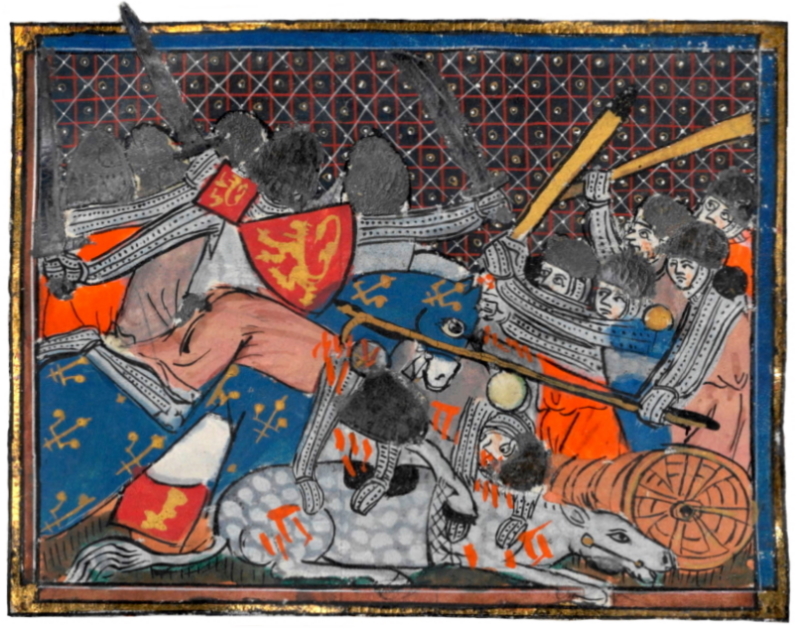
1302 as a number
Mathematically, 1302 is a composite even integer. Its prime factorization is 2 × 3 × 7 × 31. From that factorization it has 16 positive divisors in total. The sum of all divisors is 3,072, so the sum of proper divisors exceeds 1302 and the number is classified as abundant. Beyond these elementary arithmetical properties, 1302 functions in counting, indexing, and chronological notation without special symbolic meaning.
Major events in the year AD 1302
Several widely cited events mark 1302 in European history. In Flanders the Battle of the Golden Spurs (near Kortrijk/Courtrai) saw heavily armed Flemish infantry defeat a contingent of French cavalry, an episode celebrated in local memory as a demonstration of urban militias and infantry effectiveness against feudal mounted knights. In Italy, the poet Dante Alighieri was condemned in absentia by the Florentine government and entered a period of exile that profoundly shaped his later writings, including the composition of major poetic works.
In Rome Pope Boniface VIII issued the papal bull Unam Sanctam in 1302, a forceful assertion of papal primacy in spiritual and, by implication, temporal matters. That pronouncement intensified an already tense relationship between the papacy and secular rulers, especially the French crown under King Philip IV, and fed into conflicts and political maneuvers in the following years.
Regional context and other developments
- British Isles: Anglo-Scottish tension and the ongoing Wars of Scottish Independence influenced military and diplomatic priorities in the region.
- Italy and the Mediterranean: city-states and maritime republics continued to shape trade, finance, and political alliances; communal governments asserted local autonomy.
- East and Central Asia: the Yuan dynasty continued to govern large parts of China under Mongol rule; Japan remained under Kamakura-period institutions.
Significance and legacy
Events of 1302 exemplify broader medieval trends: the rise of organized urban forces and infantry that challenged traditional cavalry dominance; the struggle between centralizing monarchies and both local liberties and ecclesiastical claims; and a cultural milieu that produced enduring literature and legal-political thought. Military outcomes, papal pronouncements, and the exilic experiences of prominent figures contributed to political realignments and intellectual currents that shaped the later Middle Ages.
Notable points
- The Battle of the Golden Spurs became an emblem of Flemish resistance and is often cited in discussions of infantry versus cavalry in medieval warfare.
- Unam Sanctam remains a key document in the history of papal claims to authority.
- Dante's exile beginning in 1302 was consequential for his career and for the composition of works that would influence European literature and thought.
Related articles
Author
AlegsaOnline.com 1302 — the number and the year AD (events, context, significance) Leandro Alegsa
URL: https://en.alegsaonline.com/art/111235