
1299
1299 as a year and an integer: overview of its mathematical properties, common historical associations (notably the traditional date for the Ottoman beylik’s beginning), and related facts.
1299 can refer either to the integer after 1298 and before 1300 or to the year 1299 CE in the late medieval period. As a number it has straightforward arithmetic properties; as a year it is commonly remembered because later Ottoman tradition places the foundation of the Ottoman beylik about this time. Both usages—numerical and chronological—appear in encyclopedic and historical contexts.
Image gallery
1 Image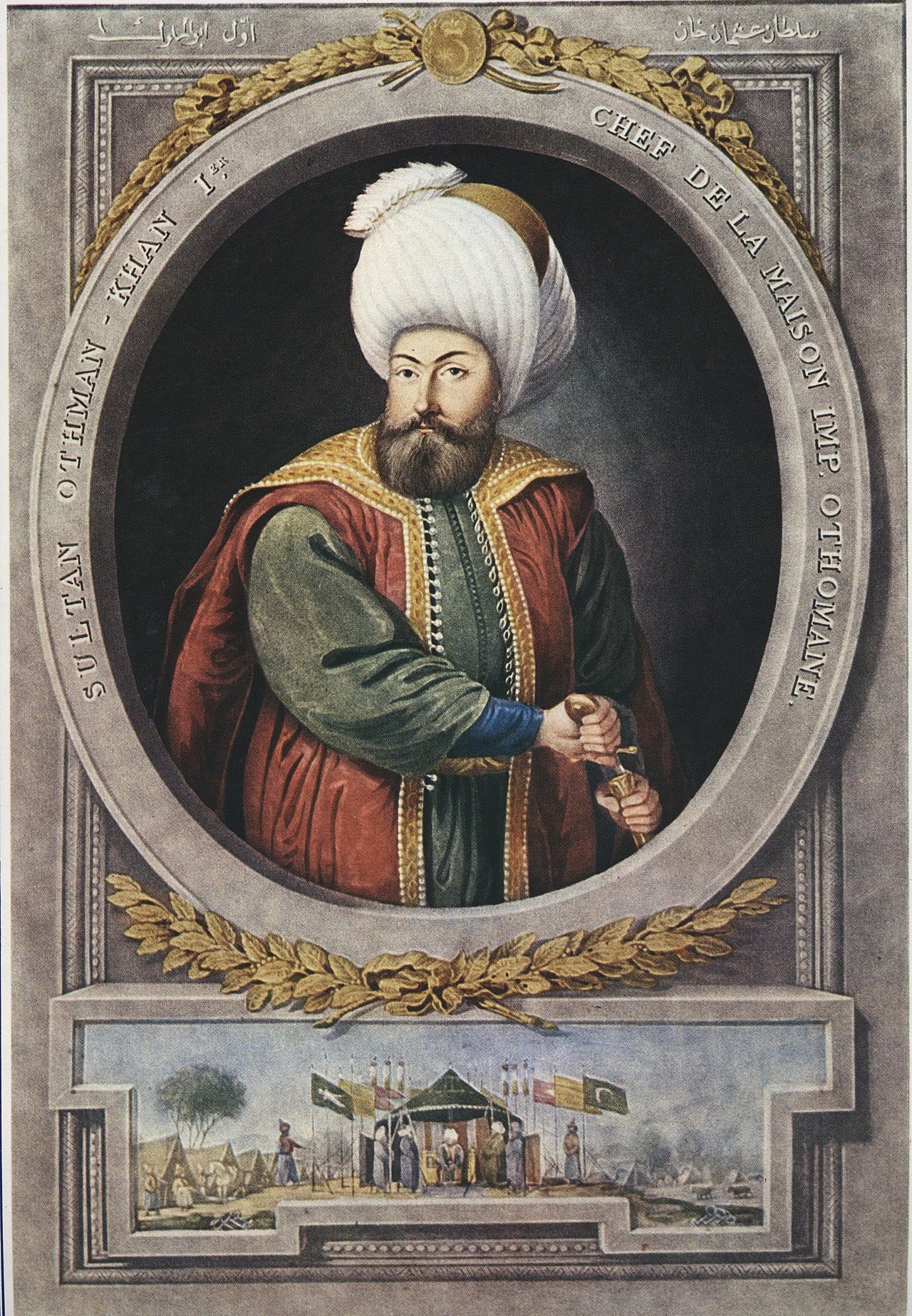
Mathematical properties
As an integer, 1299 is a composite, odd number. Its prime factorization is 3 × 433, so it is a semiprime (the product of two prime numbers). The positive divisors of 1299 are 1, 3, 433 and 1299; the sum of proper divisors is 437, which is less than 1299, so it is classified as a deficient number. In Roman numerals 1299 is written MCCXCIX. In binary it is 10100010011.
1299 (the year): historical context and significance
The year 1299 belongs to the late thirteenth century, a period marked by shifting political landscapes across Eurasia: the fragmentation of older polities, the consolidation of regional principalities, and the continuing effects of Mongol expansion. One of the developments most often associated with 1299 is the traditional dating—given by later Ottoman chronicles—for the beginning of Ottoman rule under Osman I. Although contemporary documentation is scarce and historians debate precise years, 1299 is widely used as a conventional starting point for the rise of the Ottoman state that would later grow into an empire.
Elsewhere in Eurasia, the late 1200s saw established medieval kingdoms and states coping with military campaigns, dynastic changes, trade realignments, and local uprisings. Maritime commerce around the Mediterranean and the North Sea continued to shape economic and political relations among Italian city-states, the Byzantine world, and the kingdoms of western and northern Europe. In many regions, the thirteenth century set conditions—political, economic and social—that would influence fourteenth-century transformations.
Uses and notable distinctions
- Numeric: 1299 is a four-digit composite number and a semiprime (3 × 433).
- Chronological: often cited as the conventional date for the foundation of the Ottoman polity under Osman I, though the exact year is a topic of scholarly caution.
- Notation facts: Roman numeral MCCXCIX; binary 10100010011.
When 1299 appears in modern contexts it may be as an identifier—model number, code, or part of an archival citation—but its most enduring associations are its simple arithmetical structure and its place in late-medieval chronology as a convenient marker for the start of a major political transformation in Anatolia and Southeastern Europe.
Related articles
Author
AlegsaOnline.com 1299 Leandro Alegsa
URL: https://en.alegsaonline.com/art/111222