
1182: the Number and the Year
An overview of the integer 1182 and the year AD 1182, with mathematical properties, major historical events — notably the Massacre of the Latins in Constantinople — and wider historical context.
1182 can refer either to the integer that follows 1181 and precedes 1183, or to the calendar year AD 1182 (MCLXXXII). As a numeral it has straightforward arithmetical properties used in number theory and classification. As a year it sits in the high Middle Ages, a period marked by political upheaval across Europe, Byzantium, the Islamic world and East Asia.
Image gallery
1 Image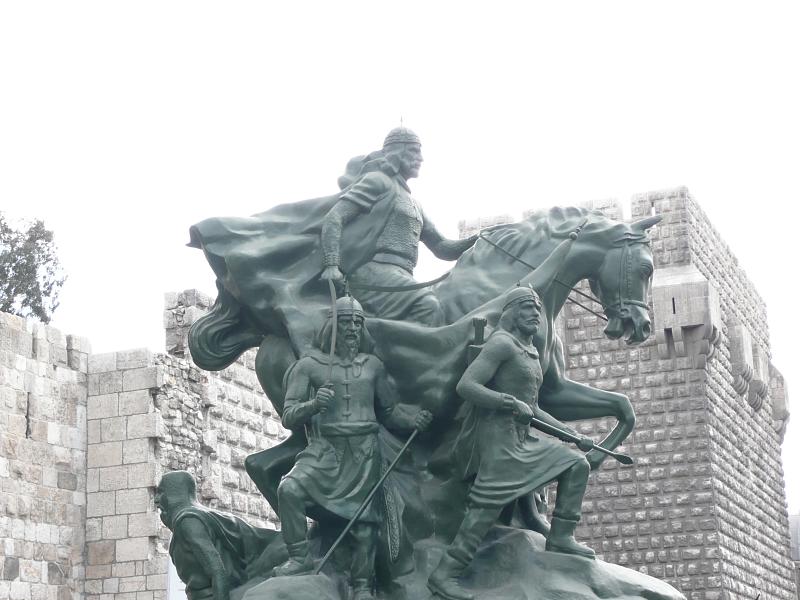
Number properties
As an integer, 1182 is even and composite. Its prime factorization is 2 × 3 × 197. Its positive divisors are limited in number and include 1, 2, 3, 6, 197, 394, 591 and 1182. The sum of its proper divisors exceeds 1182, which classifies it as an abundant number. In Roman numerals it is written MCLXXXII.
Historical events (AD 1182)
The year AD 1182 occurred during a moment of significant transition in several regions. In the Byzantine capital Constantinople, deep social and political tensions erupted into violence in what became known as the Massacre of the Latins: attacks targeted Western European merchants and other Latin residents of the city, damaging relations between Byzantium and the Latin West.
Contemporaneously, ambitious leaders exploited instability. Andronikos Komnenos used unrest within the empire to extend his influence and challenge the ruling regency; his actions accelerated broader political change in Constantinople. In Western Europe, King Philip II of France took measures against Jewish communities in parts of his domain, ordering their expulsion and seizing some property — a policy that had economic and social consequences.
Beyond Europe, the wider period saw ongoing military and dynastic struggles: the Genpei War continued to reshape Japan's political map, and in the eastern Mediterranean the balance of power among Muslim rulers and the Crusader states was shifting, a process associated with the rise of leaders such as Saladin in the coming years.
Why 1182 matters: as a number it serves in arithmetic, calendrical notation and cataloging; as a year it illustrates how local conflicts, religious tensions and political ambition intersected in the late twelfth century. Records from 1182 feed later chroniclers and historians assessing the causes and consequences of late medieval change.
Related articles
Author
AlegsaOnline.com 1182: the Number and the Year Leandro Alegsa
URL: https://en.alegsaonline.com/art/111097